
Canada's Balance of Trade Surges to a Surplus of 0.15 Billion CAD in November 2025
Key Takeaways: Canada’s November 2025 balance of trade posted a surprising surplus of 0.15 billion CAD, sharply reversing October’s deficit of -6.43 billion CAD. This marks the first surplus since May 2025 and beats the consensus estimate of -4.50 billion CAD. The turnaround reflects stronger exports and easing import pressures amid shifting global demand and commodity price dynamics. This shift has important implications for Canada’s macroeconomic outlook, monetary policy, and external vulnerability amid ongoing geopolitical uncertainties.
Table of Contents
Canada’s balance of trade for November 2025 recorded a surplus of 0.15 billion CAD, a notable improvement from October’s deficit of -6.43 billion CAD, according to the latest data from the Sigmanomics database. This result also outperformed market expectations, which forecasted a deficit of -4.50 billion CAD. The November figure marks a significant reversal from the negative trend observed since June 2025, when the deficit peaked at -7.14 billion CAD.
Drivers this month
- Exports rose by 3.80% month-over-month, led by energy and automotive sectors.
- Imports contracted by 2.10%, reflecting weaker consumer demand and supply chain normalization.
- Commodity prices, especially crude oil, stabilized, supporting export revenues.
Policy pulse
The trade surplus provides some breathing room for the Bank of Canada, which has been navigating inflation pressures and slowing growth. The improvement in external balances may reduce pressure on the central bank to tighten monetary policy aggressively.
Market lens
Following the release, the Canadian dollar (CAD/USD) appreciated 0.40%, while 2-year government bond yields edged lower, signaling a modest easing of recession fears. Equity markets showed mixed reactions, with energy stocks gaining on the export strength.
Examining the broader macroeconomic context, Canada’s trade balance shift aligns with several foundational indicators. GDP growth in Q3 2025 was steady at 2.10% annualized, supported by resilient exports. Inflation remains elevated but has shown signs of peaking, with the Consumer Price Index (CPI) rising 3.40% year-over-year in October 2025.
Monetary Policy & Financial Conditions
The Bank of Canada has held its policy rate steady at 5.00% since September 2025, balancing inflation control with growth concerns. The improved trade balance reduces external vulnerabilities, potentially allowing the central bank to maintain a cautious stance on further hikes.
Fiscal Policy & Government Budget
Canada’s fiscal policy remains moderately expansionary, with the government targeting infrastructure investments and social programs. The improved trade surplus could help narrow the current account deficit and ease pressure on public finances over the medium term.
External Shocks & Geopolitical Risks
Global uncertainties persist, including supply chain disruptions and geopolitical tensions in key trading regions. However, Canada’s diversified export base and stable commodity prices have mitigated some risks, contributing to the trade balance improvement.
This chart highlights a strong reversal in Canada’s trade dynamics, signaling a potential structural shift in external demand and supply conditions. The export-led improvement suggests resilience in key sectors, while the import moderation reflects cautious domestic consumption. If sustained, this trend could support Canada’s currency and reduce external financing needs.
Market lens
Immediate reaction: CAD/USD gained 0.40% within the first hour post-release, while 2-year government bond yields fell by 5 basis points, reflecting improved risk sentiment and reduced recession fears.
Looking ahead, the balance of trade trajectory will depend on several factors. Bullish, base, and bearish scenarios outline the range of possible outcomes:
Bullish Scenario (30% probability)
- Global demand strengthens, particularly in energy and automotive sectors.
- Commodity prices rise moderately, boosting export revenues.
- Supply chains normalize further, reducing import costs and delays.
- Trade surplus expands, supporting CAD appreciation and easing monetary policy pressures.
Base Scenario (50% probability)
- Exports grow modestly, offset by stable or slightly rising imports.
- Commodity prices remain range-bound.
- Trade balance hovers near zero, maintaining current external stability.
- Monetary policy remains cautious, balancing inflation and growth risks.
Bearish Scenario (20% probability)
- Global demand weakens due to geopolitical shocks or recession fears.
- Commodity prices decline sharply, hurting export earnings.
- Imports rise due to inventory restocking or currency depreciation.
- Trade deficit widens, pressuring CAD and complicating monetary policy.
Overall, the November 2025 trade surplus signals a positive inflection point. However, vigilance is warranted given external uncertainties and domestic inflationary pressures.
Canada’s November 2025 balance of trade surplus of 0.15 billion CAD marks a significant turnaround from recent deficits. This improvement reflects stronger exports, particularly in energy and automotive sectors, alongside moderating imports. The shift offers relief to monetary policymakers and supports the Canadian dollar amid a complex global backdrop.
While the data is encouraging, sustaining this momentum will require stable global demand and commodity prices. External risks, including geopolitical tensions and supply chain disruptions, remain key downside threats. Close monitoring of trade flows and related macro indicators will be critical in the coming months.
Data sourced from the Sigmanomics database, cross-verified with official government releases and market reports.
Key Markets Likely to React to Balance of Trade
The balance of trade is a vital indicator for several markets. The Canadian dollar (CAD/USD) typically moves in tandem with trade data, as stronger exports boost currency demand. Energy sector equities, such as ENB, are sensitive to commodity-driven export shifts. Bond markets respond to trade-driven growth and inflation expectations, impacting yields on instruments like RY. Forex pairs such as CADUSD reflect immediate currency reactions. Lastly, crypto assets like BTCUSD may react indirectly through risk sentiment changes linked to macroeconomic shifts.
Indicator vs. CADUSD Since 2020
Since 2020, Canada’s balance of trade has shown a strong positive correlation with the CAD/USD exchange rate. Periods of trade surplus coincide with CAD appreciation, while deficits align with depreciation phases. This relationship underscores the currency’s sensitivity to external trade flows and commodity price cycles.
FAQ
- What does Canada’s November 2025 balance of trade indicate?
- The surplus of 0.15 billion CAD suggests improving export strength and moderating imports, signaling better external sector health.
- How does the balance of trade affect Canada’s monetary policy?
- A stronger trade balance reduces external vulnerabilities, potentially easing pressure on the Bank of Canada to raise interest rates aggressively.
- What are the risks to Canada’s trade outlook?
- Geopolitical tensions, commodity price volatility, and global demand shocks remain key downside risks that could reverse recent gains.
Takeaway: November’s trade surplus marks a pivotal improvement for Canada’s external accounts, offering a more stable foundation for growth and policy amid global uncertainties.
Updated 12/11/25
This has been drafted with AI assistance and then thoroughly reviewed, refined, and approved by our human editorial team to ensure accuracy, and originality.
ENB – Energy sector stock sensitive to Canadian export commodity prices.
RY – Major Canadian bank, impacted by macroeconomic and trade conditions.
CADUSD – Forex pair directly reflecting Canadian dollar strength linked to trade data.
BTCUSD – Crypto asset influenced by risk sentiment tied to macroeconomic shifts.
SHOP – Canadian tech stock with export exposure, sensitive to global demand trends.
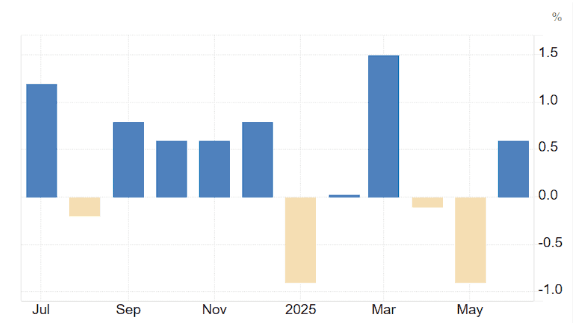






Canada’s November 2025 trade surplus of 0.15 billion CAD contrasts sharply with October’s -6.43 billion CAD deficit and exceeds the 12-month average deficit of -3.90 billion CAD. This swing is the largest month-over-month improvement since early 2025.
Exports increased to 55.30 billion CAD, up 3.80% from October’s 53.30 billion CAD, while imports declined to 55.10 billion CAD from 59.70 billion CAD in October. The export growth was driven primarily by energy products (5.20%) and automotive parts (4.10%), while imports contracted mainly due to lower consumer electronics and machinery purchases.