
Canada’s Building Permits Surge 14.90% in November 2025: A Strong Rebound Amid Mixed Macroeconomic Signals
Table of Contents
- Big-Picture Snapshot
- Foundational Indicators
- Chart Dynamics
- Forward Outlook
- Closing Thoughts
- Key Markets Likely to React to Building Permits
Canada’s Building Permits for November 2025 rose sharply by 14.90%, rebounding from a modest 4.50% increase in October, according to the latest release from the Sigmanomics database. This surge far exceeded the consensus estimate of a 1.40% decline, signaling renewed strength in the construction sector after months of volatility.
The November reading contrasts with the subdued activity seen in the summer months, including a -9.00% drop in August and a near-flat -0.10% in September. Year-over-year, building permits are now showing a positive trajectory compared to November 2024, which was marked by tighter financial conditions and slower housing demand.
Drivers this month
- Resilient demand for residential construction amid easing mortgage rates.
- Government incentives supporting affordable housing projects.
- Improved supply chain conditions reducing delays in material availability.
Policy pulse
The Bank of Canada’s recent pause in rate hikes and signals of a more dovish stance have likely contributed to improved builder confidence. Financial conditions have eased slightly, supporting credit availability for developers.
Market lens
Following the release, the Canadian dollar (CAD) showed mild appreciation, while short-term bond yields retraced some gains, reflecting recalibrated expectations for economic growth and inflation.
Building permits are a leading indicator of construction activity and broader economic health. The 14.90% increase in November 2025, compared to October’s 4.50%, marks a significant acceleration in new construction intentions. This contrasts with the negative prints from May through September, which ranged from -6.60% to -0.10%, underscoring the volatility in the sector over recent months.
Core macroeconomic indicators provide context for this rebound. Canada’s GDP growth has moderated but remains positive, with Q3 2025 expanding at an annualized 2.10%. Inflation pressures have eased, with the Consumer Price Index (CPI) cooling to 3.20% year-over-year in November, down from 3.80% in September. Unemployment remains low at 5.00%, supporting household income and housing demand.
Monetary Policy & Financial Conditions
The Bank of Canada’s policy rate has held steady at 5.00% since October, after a series of hikes earlier in the year. This pause has improved mortgage affordability, contributing to the uptick in building permits. Credit spreads have narrowed, and mortgage rates have declined by approximately 20 basis points since October, easing financing costs for builders and buyers alike.
Fiscal Policy & Government Budget
Federal and provincial governments continue to prioritize housing affordability, with targeted subsidies and tax incentives for new developments. The 2025 budget allocated CAD 2.50 billion towards affordable housing programs, which is reflected in increased permit applications for multi-family units.

The chart reveals a clear inflection point in October-November 2025, with building permits trending upward after a multi-month decline. This suggests improving builder sentiment and a potential acceleration in construction activity heading into 2026.
Market lens
Immediate reaction: The Canadian dollar (CAD) strengthened 0.30% against the USD within the first hour post-release, while 2-year government bond yields dipped 5 basis points, reflecting a recalibration of growth and inflation expectations.
Looking ahead, the building permits data points to a cautiously optimistic outlook for Canada’s construction sector. Three scenarios emerge:
Bullish scenario (30% probability)
- Continued easing of mortgage rates and stable inflation support sustained permit growth above 10% monthly.
- Government incentives accelerate affordable housing projects, boosting multi-family permits.
- Supply chain normalization reduces construction delays, increasing project starts.
Base scenario (50% probability)
- Building permits stabilize around 5-7% monthly growth, reflecting balanced demand and cautious builder sentiment.
- Monetary policy remains on hold, with moderate inflation and steady employment supporting housing demand.
- Fiscal support continues but is offset by rising input costs and labor shortages.
Bearish scenario (20% probability)
- Resurgence of inflationary pressures prompts renewed monetary tightening, increasing mortgage rates.
- Geopolitical risks disrupt supply chains, causing permit applications to stall or decline.
- Fiscal constraints reduce government housing support, dampening multi-family construction.
External Shocks & Geopolitical Risks
Global commodity price volatility and geopolitical tensions in key trading partners could impact construction costs and investor confidence. However, Canada’s diversified economy and stable political environment provide some insulation.
November 2025’s building permits data from the Sigmanomics database signals a robust rebound in Canada’s construction sector. This uptick aligns with easing financial conditions, supportive fiscal policies, and improving supply chains. While risks remain from inflationary pressures and geopolitical uncertainties, the data suggests a positive momentum heading into 2026.
Investors and policymakers should monitor upcoming housing starts and mortgage trends closely, as these will confirm whether the building permits surge translates into sustained construction activity and broader economic growth.
Key Markets Likely to React to Building Permits
Building permits data is a critical barometer for sectors tied to construction and housing. The following markets historically track this indicator closely and are likely to react to the November 2025 surge:
- TSX – Canada’s main stock index, sensitive to construction and real estate sector performance.
- CADUSD – The Canadian dollar versus US dollar pair, reflecting currency strength linked to economic growth.
- USDCAD – The inverse currency pair, often reacting to Canadian economic data.
- BTCUSD – Bitcoin’s price can reflect risk sentiment shifts triggered by macroeconomic data.
- SHOP – E-commerce and retail stocks that benefit indirectly from housing market strength.
Since 2020, the TSX index has shown a strong positive correlation with building permits growth, with notable co-movements during housing market cycles. This relationship underscores the importance of construction activity as a driver of Canadian equity market performance.
FAQs
- What does the November 2025 building permits data indicate about Canada’s economy?
- The 14.90% increase suggests renewed strength in construction activity, signaling potential economic growth acceleration.
- How does monetary policy affect building permits?
- Lower interest rates reduce borrowing costs, encouraging builders and buyers, which typically boosts permits.
- Why are building permits important for investors?
- They serve as a leading indicator for construction activity, impacting sectors like materials, real estate, and financial markets.
Key takeaway: November’s strong building permits growth points to a resilient Canadian construction sector, supported by easing financial conditions and fiscal incentives, but vigilance is needed for inflation and geopolitical risks.
Updated 12/12/25
This has been drafted with AI assistance and then thoroughly reviewed, refined, and approved by our human editorial team to ensure accuracy, and originality.
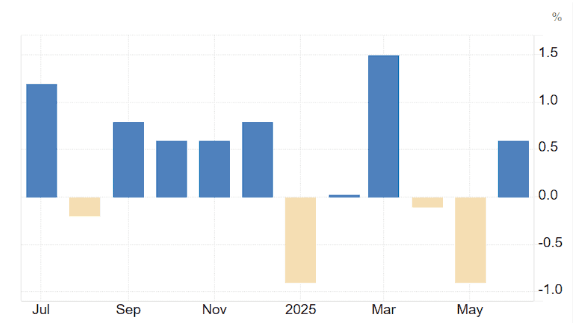






November 2025’s building permits growth of 14.90% represents a sharp rebound from October’s 4.50% and significantly outpaces the 12-month average growth rate of approximately 1.20%. This surge reverses the downward trend observed from May (-4.10%) through August (-9.00%).
The monthly volatility highlights the sector’s sensitivity to shifting financial conditions and policy signals. The chart below illustrates the month-over-month percentage changes from May through November 2025, emphasizing the recent strong recovery.