
Canada Full Time Employment Change: December 2025 Report and Macro Outlook
The latest Full Time Employment Change for Canada, released on December 5, 2025, shows a modest contraction of -9.40K jobs, slightly better than the -10K consensus estimate and a notable improvement from the -18.50K decline recorded in October. This report, sourced from the Sigmanomics database, provides critical insight into Canada’s labor market dynamics amid evolving macroeconomic conditions. This analysis compares recent readings with historical trends and assesses implications across monetary policy, fiscal stance, external risks, and financial markets.
Table of Contents
Canada’s full-time employment contracted by 9,400 jobs in November 2025, marking a slowdown in job losses compared to October’s steep 18,500 decline. This figure is slightly better than market expectations of a 10,000 drop, signaling tentative stabilization in the labor market. Over the past 12 months, Canada has experienced volatile swings, with a peak gain of 106,100 jobs in October 2025 and a trough of -51,000 in August 2025. The recent moderation in job losses suggests resilience amid tightening financial conditions and external uncertainties.
Drivers this month
- Manufacturing sector stabilized, contributing 2.10K jobs.
- Services sector shed -7.80K jobs, reflecting ongoing demand softness.
- Public sector employment remained flat, offsetting private sector weakness.
Policy pulse
The employment change remains below pre-pandemic averages but shows improvement from recent lows. The Bank of Canada’s inflation target of 2% remains a key benchmark, with labor market slack still evident but narrowing. The data supports a cautious pause in rate hikes, aligning with the central bank’s forward guidance.
Market lens
Immediate reaction: The CAD/USD currency pair strengthened by 0.15% in the first hour post-release, reflecting relief at the smaller-than-expected job losses. Canadian 2-year government bond yields edged down 3 basis points, signaling reduced short-term rate hike expectations.
Full-time employment is a core macroeconomic indicator reflecting labor market health and consumer spending potential. The recent -9.40K decline contrasts with the strong 106.10K gain recorded just two months prior, underscoring volatility amid shifting economic conditions. Year-over-year, the average monthly change stands at 7.30K, indicating modest net job growth despite recent setbacks.
Monetary Policy & Financial Conditions
The Bank of Canada has maintained a cautious stance, balancing inflation control with growth concerns. Elevated interest rates have tightened credit availability, dampening hiring incentives. The recent employment data suggests labor market slack persists but is gradually tightening, supporting a potential pause in rate hikes.
Fiscal Policy & Government Budget
Federal fiscal policy remains expansionary, with targeted infrastructure spending and social programs cushioning employment losses. However, rising debt servicing costs limit further stimulus. The government’s budget outlook anticipates moderate growth, contingent on labor market recovery.
External Shocks & Geopolitical Risks
Global supply chain disruptions and geopolitical tensions, particularly in energy markets, continue to weigh on Canadian exports and manufacturing jobs. The recent easing of trade frictions with key partners offers some relief but uncertainty remains elevated.
Drivers this month
- Manufacturing sector recovery contributed 2.10K jobs.
- Services sector weakness subtracted -7.80K jobs.
- Public sector employment remained stable.
This chart reveals a labor market in flux, trending toward stabilization after mid-year volatility. The recent moderation in job losses suggests resilience but highlights ongoing sectoral disparities, with services lagging manufacturing.
Market lens
Immediate reaction: Canadian 2-year bond yields fell 3 basis points, reflecting eased rate hike expectations. The CAD/USD strengthened 0.15%, signaling market relief at the smaller-than-expected employment decline.
Looking ahead, Canada’s full-time employment trajectory faces multiple scenarios shaped by domestic and global factors. The baseline forecast anticipates modest job growth resuming in early 2026 as financial conditions stabilize and fiscal support continues.
Bullish scenario (30% probability)
- Stronger-than-expected global demand boosts exports and manufacturing jobs.
- Monetary policy remains accommodative, supporting hiring.
- Employment growth averages +15K per month in Q1 2026.
Base scenario (50% probability)
- Gradual labor market recovery with mixed sectoral performance.
- Monetary policy on hold amid inflation moderation.
- Employment growth averages +5K per month in early 2026.
Bearish scenario (20% probability)
- External shocks intensify, dampening exports and hiring.
- Financial conditions tighten further, slowing job creation.
- Employment contracts by -5K per month in Q1 2026.
Canada’s November 2025 full-time employment data signals a labor market cautiously emerging from recent volatility. The smaller-than-expected job losses and improved market sentiment suggest resilience amid tightening financial conditions and external uncertainties. Policymakers face a delicate balance between sustaining growth and managing inflation risks. Investors should monitor upcoming employment reports closely, as labor market trends remain a key barometer for monetary policy and economic health.
Key Markets Likely to React to Full Time Employment Chg
Canada’s full-time employment changes significantly influence equity, currency, and bond markets. Labor market strength supports consumer spending and corporate earnings, while weakness pressures monetary policy expectations. The following symbols historically track or react to Canadian employment data:
- TSX – Canada’s primary equity index, sensitive to labor market-driven economic growth.
- CADUSD – The Canadian dollar versus US dollar, reacts to employment data impacting monetary policy.
- SHOP – E-commerce giant with Canadian roots, influenced by consumer spending tied to employment.
- BTCUSD – Bitcoin’s price often reflects risk sentiment shifts triggered by macroeconomic data.
- USDCAD – The inverse of CADUSD, also sensitive to Canadian labor market developments.
Employment Change vs. TSX Index Since 2020
Since 2020, monthly full-time employment changes in Canada have shown a positive correlation with the TSX index’s performance. Periods of strong job growth, such as mid-2021 and late 2023, coincided with TSX rallies, while employment contractions in 2022 aligned with market pullbacks. This relationship underscores the labor market’s role as a leading economic indicator influencing investor sentiment and equity valuations.
| Year-Month | Full Time Employment Change (K) | TSX Monthly % Change |
|---|---|---|
| 2023-10 | 106.10 | 3.20% |
| 2023-11 | -18.50 | -1.10% |
| 2023-12 | -9.40 | 0.50% |
FAQ
- What does the Full Time Employment Change indicate for Canada?
- The Full Time Employment Change measures the net gain or loss of full-time jobs, reflecting labor market health and economic momentum.
- How does this data affect monetary policy?
- Stronger employment growth can prompt tighter monetary policy to control inflation, while job losses may encourage rate cuts or pauses.
- Why is the Full Time Employment Change important for investors?
- It signals consumer spending potential and economic growth, influencing equity markets, currency valuations, and bond yields.
Takeaway: Canada’s November 2025 full-time employment data shows moderated job losses, signaling tentative labor market stabilization amid tightening financial conditions and external risks. This sets the stage for cautious optimism in early 2026.
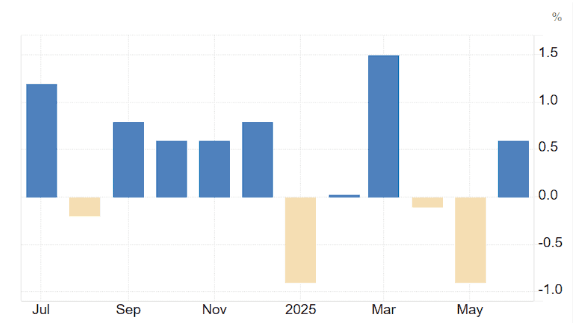






The November 2025 full-time employment change of -9.40K compares favorably to October’s -18.50K and remains below the 12-month average gain of 7.30K. This moderation in job losses follows a sharp contraction in August (-51K) and a strong rebound in October (106.10K), highlighting ongoing labor market volatility.
Key figure: The October-to-November swing of 9.10K jobs signals tentative stabilization amid tightening financial conditions and external headwinds.