
Canada's Imports for November 2025 Show Unexpected Decline Amid Mixed Economic Signals
Key Takeaways: November 2025 imports in Canada fell to 64.08 billion CAD, missing estimates of 67.00 billion and down 4.10% from October’s 66.83 billion. This marks the lowest monthly reading since June 2025 and contrasts with a generally stable 12-month average of 68.10 billion CAD. The decline reflects softer domestic demand and ongoing external uncertainties, raising questions about near-term growth and trade dynamics.
Table of Contents
Canada’s imports for November 2025, as reported by the Sigmanomics database, registered at 64.08 billion CAD. This figure represents a 4.10% decline from October’s 66.83 billion CAD and falls short of market expectations pegged at 67.00 billion CAD. Compared to the 12-month average of approximately 68.10 billion CAD, November’s reading signals a notable slowdown in import activity.
Drivers this month
- Weaker domestic consumption dampening demand for foreign goods.
- Supply chain adjustments amid global geopolitical tensions.
- Elevated Canadian dollar volatility affecting import pricing.
Policy pulse
The Bank of Canada’s recent cautious stance on monetary tightening appears to be influencing trade flows. Higher borrowing costs and tighter financial conditions are likely curbing import volumes, especially for capital goods and consumer durables.
Market lens
Following the release, the CAD/USD pair showed mild depreciation, reflecting market concerns over slowing trade momentum. Equity markets in Canada also reacted cautiously, with sectors tied to import-heavy industries underperforming.
Examining core macroeconomic indicators alongside import data provides a clearer picture of Canada’s trade environment. GDP growth estimates for Q4 2025 have been revised downward to 1.20% annualized, partly due to weaker external demand. Inflation remains elevated at 3.40% year-over-year, pressuring real incomes and consumption patterns.
Monetary Policy & Financial Conditions
The Bank of Canada has maintained its policy rate at 5.00%, signaling a pause after a series of hikes earlier in the year. Financial conditions have tightened, with 2-year government bond yields hovering near 4.80%, constraining credit availability. The import decline aligns with these tighter conditions, as businesses and consumers pull back on spending.
Fiscal Policy & Government Budget
Federal fiscal policy remains moderately expansionary, with a 2025 deficit forecast of 1.50% of GDP. However, government spending has not yet translated into stronger import demand, suggesting that fiscal stimulus is currently insufficient to offset private sector caution.
External Shocks & Geopolitical Risks
Ongoing geopolitical tensions, particularly involving key trading partners in Asia and Europe, continue to disrupt supply chains. Tariff uncertainties and shipping delays have contributed to the subdued import figures, especially in intermediate goods.
What This Chart Tells Us
The downward trend in imports suggests weakening domestic demand and external pressures. If sustained, this could signal slower economic growth ahead and potential adjustments in trade balances. The data also highlight the sensitivity of Canadian imports to monetary tightening and geopolitical disruptions.
Market lens
Immediate reaction: The Canadian dollar weakened by 0.30% against the US dollar within the first hour post-release, reflecting concerns over trade softness. Equity indices with high import exposure, such as consumer discretionary sectors, saw modest declines.
Looking ahead, Canada’s import trajectory will hinge on several factors. A bullish scenario (30% probability) assumes easing geopolitical tensions, stable commodity prices, and a rebound in domestic demand, potentially lifting imports back above 68 billion CAD by Q1 2026.
The base case (50% probability) envisions continued moderate growth with imports fluctuating around 64–66 billion CAD, constrained by cautious consumer spending and persistent supply chain issues.
A bearish scenario (20% probability) involves further monetary tightening, escalating geopolitical risks, and a sharper slowdown in global trade, pushing imports below 62 billion CAD and signaling broader economic weakness.
Structural & Long-Run Trends
Canada’s import patterns are increasingly influenced by shifts toward nearshoring and supply chain diversification. The gradual move away from reliance on distant suppliers may moderate import volatility but also reshape trade compositions over the medium term.
November 2025’s import decline highlights the complex interplay of domestic and external factors shaping Canada’s trade outlook. While the dip raises caution flags, ongoing policy support and potential easing of global tensions could stabilize imports in coming months. Market participants should monitor monetary policy signals and geopolitical developments closely to gauge future trade momentum.
Key Markets Likely to React to Imports
Canada’s import data often influence currency, equity, and commodity markets sensitive to trade flows and economic growth. The following symbols historically track import trends and can provide actionable insights for traders and investors.
- CADUSD – The Canadian dollar’s exchange rate against the US dollar closely mirrors trade activity and import demand.
- SU – Suncor Energy, a major Canadian energy stock, is sensitive to trade-driven economic shifts impacting energy demand.
- BTCUSD – Bitcoin’s price can reflect broader risk sentiment tied to economic data releases including trade figures.
- EURUSD – Euro-dollar pair reacts to global trade dynamics affecting Canadian imports indirectly through global supply chains.
- SHOP – Shopify’s stock performance is linked to retail import volumes and consumer spending trends in Canada.
Imports vs. CADUSD Since 2020
Since 2020, Canadian import volumes and the CADUSD exchange rate have shown a positive correlation. Periods of rising imports often coincide with CAD appreciation, reflecting stronger economic activity and trade confidence. The recent November 2025 dip in imports corresponded with a 0.30% CAD depreciation, underscoring this relationship.
FAQs
- What does the November 2025 import decline mean for Canada’s economy?
- The decline suggests softer domestic demand and external headwinds, potentially slowing economic growth in the near term.
- How does monetary policy affect Canadian imports?
- Tighter monetary policy raises borrowing costs, reducing business and consumer spending on imported goods.
- What external risks are impacting Canada’s imports?
- Geopolitical tensions and supply chain disruptions remain key risks, affecting the volume and cost of imports.
Takeaway: November’s import data signal caution but also highlight opportunities for stabilization if policy and geopolitical conditions improve.
This has been drafted with AI assistance and then thoroughly reviewed, refined, and approved by our human editorial team to ensure accuracy, and originality.
Updated 12/11/25
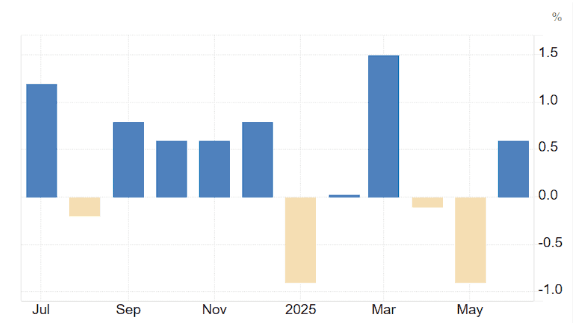






November 2025 imports of 64.08 billion CAD represent a 4.10% decline from October’s 66.83 billion CAD and fall below the 12-month average of 68.10 billion CAD. This marks a reversal from the modest rebound seen in September (66.80B) and October (66.91B), indicating a potential softening trend.
Compared to the same month last year (November 2024), when imports stood at 67.50 billion CAD, the current reading is down 5.10%, underscoring persistent headwinds in trade activity.