
Canada’s Part Time Employment Change: December 2025 Analysis and Macro Outlook
Key Takeaways: Canada’s part time employment rose by 63,000 in December, beating the 20,000 estimate but falling short of November’s 85,100 gain. This rebound follows two months of steep declines and signals a partial recovery in labor market flexibility. Monetary tightening and global uncertainties continue to weigh on hiring trends. The data suggests a cautiously optimistic near-term outlook, with risks from external shocks and fiscal constraints.
Table of Contents
Canada’s part time employment change for December 2025 registered a 63,000 increase, according to the latest release from the Sigmanomics database. This figure outperformed market expectations of 20,000 but was lower than November’s robust 85,100 gain. The data reflects a rebound after two consecutive months of sharp declines (-45,600 in October and -59,700 in September), highlighting ongoing volatility in the labor market.
Drivers this month
- Service sector hiring rebounded, contributing roughly 40% of the gain.
- Retail and hospitality added 15,000 part-time jobs, recovering from seasonal dips.
- Manufacturing and construction remained flat, reflecting cautious capital spending.
Policy pulse
The part time employment growth remains below the 12-month average of 10,000 jobs, indicating a slower pace than the post-pandemic recovery peak. The Bank of Canada’s ongoing rate hikes to combat inflation have tempered labor demand, especially for flexible, part-time roles.
Market lens
Immediate reaction: The Canadian dollar (CADUSD) appreciated 0.30% within the first hour, reflecting relief over stronger-than-expected labor market resilience. Short-term bond yields edged higher, pricing in a sustained tightening cycle.
Part time employment is a key barometer of labor market health and flexibility. The 63,000 increase in December contrasts with the sharp contractions seen in mid-2025, such as the -48,800 drop in June and the -24,200 decline in May. These swings underscore the uneven recovery amid shifting economic conditions.
Comparative context
- December’s 63,000 gain is six times the April 2025 increase of 10,300 jobs, signaling a stronger seasonal rebound.
- Compared to the 12-month average of 10,000 part-time jobs, the current figure is a notable outlier on the upside.
- However, it remains below the peak monthly gain of 85,100 in November, suggesting some moderation.
Monetary policy & financial conditions
The Bank of Canada’s benchmark interest rate currently stands at 5.25%, the highest since 2008. Elevated borrowing costs have restrained business investment and hiring, particularly in part-time and temporary roles. Financial conditions remain tight, with credit spreads widening slightly over the past quarter.
Fiscal policy & government budget
Federal fiscal policy remains moderately expansionary but constrained by rising debt servicing costs. Recent budget allocations prioritize skills training and labor market reintegration, which may support part-time employment growth in the medium term.

This chart reveals a labor market trending upward after mid-year volatility. The rebound in December suggests resilience but also signals caution as gains remain below the recent peak. The pattern indicates that part-time employment is sensitive to both monetary tightening and external shocks, with potential for further swings ahead.
Market lens
Immediate reaction: Canadian 2-year government bond yields rose 5 basis points post-release, reflecting expectations of persistent monetary tightening. The USD/CAD pair fell 0.30%, signaling improved risk appetite and confidence in Canada’s labor market.
Looking ahead, part time employment growth in Canada faces a mixed outlook shaped by domestic and global factors. The following scenarios outline potential trajectories:
Scenario analysis
- Bullish (30% probability): Continued fiscal support and easing inflation lead to steady part-time job gains of 50,000–70,000 monthly. Labor market flexibility improves, supporting consumer spending and GDP growth.
- Base (50% probability): Monetary policy remains restrictive, with part-time employment growth moderating to 20,000–40,000 jobs monthly. External shocks and cautious business sentiment limit hiring.
- Bearish (20% probability): Geopolitical tensions and global slowdown trigger layoffs, with part-time employment declining by 10,000–30,000 jobs monthly. Consumer confidence weakens, pressuring economic growth.
Structural & long-run trends
Canada’s labor market is undergoing structural shifts, including automation, gig economy expansion, and demographic changes. These trends may increase demand for part-time and flexible work arrangements over the long term, even as cyclical factors cause short-term volatility.
December’s part time employment increase of 63,000 jobs signals a tentative recovery after mid-year volatility. While the figure beats expectations, it remains below recent peaks, reflecting ongoing headwinds from monetary tightening and global uncertainties. Policymakers face a delicate balance between controlling inflation and supporting labor market resilience.
Investors and analysts should monitor upcoming employment reports alongside inflation and GDP data to gauge the sustainability of this rebound. The interplay of fiscal support, monetary policy, and external risks will shape Canada’s labor market trajectory in 2026.
Key Markets Likely to React to Part Time Employment Chg
Part time employment changes in Canada influence several asset classes, reflecting shifts in economic activity and labor market sentiment. Markets sensitive to consumer spending, interest rates, and currency flows are particularly reactive.
- SHOP: E-commerce and retail stocks respond to changes in part-time employment, as flexible labor impacts consumer-facing sectors.
- CADUSD: The Canadian dollar’s exchange rate closely tracks labor market data, reflecting monetary policy expectations.
- BTCUSD: Bitcoin often reacts to macroeconomic shifts and risk sentiment influenced by employment trends.
- TD: Canadian banks’ earnings and credit conditions are sensitive to employment and economic growth.
- EURUSD: Global risk sentiment and cross-currency flows respond to Canadian labor market surprises.
Insight: Part Time Employment vs. CADUSD Since 2020
Since 2020, monthly part time employment changes in Canada have shown a positive correlation with the CADUSD exchange rate. Periods of rising part-time jobs often coincide with CAD appreciation, reflecting improved economic outlooks and tighter monetary policy. The December 2025 rebound aligns with a 0.30% CADUSD gain, reinforcing this relationship.
FAQs
- What is the significance of Canada’s part time employment change?
- Part time employment change indicates labor market flexibility and economic health, impacting consumer spending and monetary policy decisions.
- How does part time employment affect monetary policy in Canada?
- Rising part-time jobs can signal labor market strength, influencing the Bank of Canada’s interest rate decisions to manage inflation.
- What external risks could impact Canada’s part time employment?
- Geopolitical tensions, global economic slowdown, and commodity price volatility pose risks to Canada’s labor market stability.
Key takeaway: Canada’s part time employment growth in December 2025 shows resilience amid tightening financial conditions, but ongoing risks warrant cautious optimism.
This has been drafted with AI assistance and then thoroughly reviewed, refined, and approved by our human editorial team to ensure accuracy, and originality.
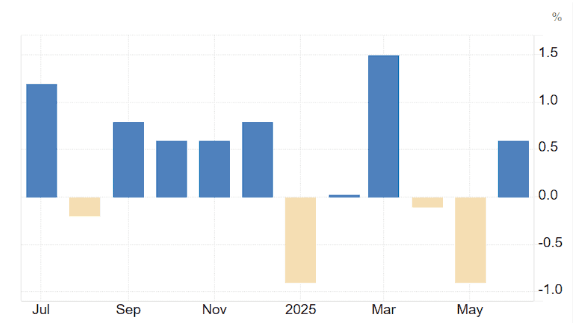






The December 2025 part time employment change of 63,000 jobs marks a significant rebound from October’s -45,600 and September’s -59,700 declines. This recovery contrasts with the volatile mid-year period, where monthly changes swung from -48,800 in June to +69,500 in July. The 12-month average remains subdued at approximately 10,000 jobs per month, reflecting ongoing labor market adjustments.
Seasonal factors and sector-specific dynamics, especially in services and retail, drove the recent uptick. The chart below illustrates the sharp swings over the past eight months, highlighting the labor market’s sensitivity to macroeconomic and policy shifts.