
Canada’s Participation Rate Dips Slightly in December 2025: A Data-Driven Analysis
Key Takeaways: Canada’s labor force participation rate edged down to 65.10% in December 2025, missing expectations by 0.20 percentage points and continuing a subtle downward trend since mid-year. This decline contrasts with the stable 65.30% average seen earlier in 2025. Monetary tightening, fiscal recalibration, and external uncertainties weigh on labor market engagement. Forward-looking risks include slower wage growth and geopolitical tensions, while structural factors such as aging demographics persist. Market reactions were muted but cautious, reflecting mixed signals on economic momentum.
Table of Contents
Canada’s labor force participation rate (LFPR) for December 2025 registered at 65.10%, down from 65.30% in November and below the consensus estimate of 65.30%, according to the latest data from the Sigmanomics database. This marks a continuation of a mild decline from the 65.40% peak recorded in July 2025. The current reading is also slightly below the 12-month average of approximately 65.25%, signaling a subtle cooling in labor market engagement.
Geographic & Temporal Scope
The participation rate data covers the entire Canadian labor market, reflecting the proportion of the working-age population either employed or actively seeking work. The December 2025 release is the most recent monthly update, providing a near real-time snapshot of labor supply trends. Historically, Canada’s LFPR has hovered between 64.50% and 65.50% over the past two years, with seasonal fluctuations and economic cycles influencing short-term movements.
Core Macroeconomic Indicators
The participation rate is a key barometer of labor market health, complementing unemployment and employment growth figures. The slight decline in LFPR coincides with a modest slowdown in employment growth and a stable but elevated unemployment rate near 5.50%. Wage growth has moderated to around 3.20% year-over-year, down from 3.80% earlier in 2025, reflecting easing labor demand pressures. Inflation remains above the Bank of Canada’s 2% target, at approximately 3.40%, sustaining monetary policy vigilance.
Monetary Policy & Financial Conditions
The Bank of Canada has maintained a cautious stance amid persistent inflation, keeping the policy rate steady at 5.00% since September 2025. Financial conditions have tightened moderately, with 2-year government bond yields hovering near 4.80%. The Canadian dollar (CAD) has shown resilience, trading around 1.32 USD/CAD, supported by commodity prices and relative interest rate differentials. These conditions have likely contributed to the slight pullback in participation, as borrowing costs and economic uncertainty weigh on job seekers’ incentives.
Fiscal Policy & Government Budget
Federal fiscal policy remains moderately expansionary, with recent budget measures focusing on infrastructure and social programs. However, efforts to rein in deficits—projected at 2.50% of GDP for 2025—may limit further stimulus. Targeted support for workforce training and re-skilling programs aims to counteract structural labor market challenges, including aging demographics and sectoral shifts. These policies could help stabilize participation rates over the medium term.
External Shocks & Geopolitical Risks
Global uncertainties, including ongoing trade tensions and geopolitical conflicts, have introduced volatility to Canada’s export sectors. Energy and manufacturing industries face headwinds from fluctuating commodity prices and supply chain disruptions. These external shocks dampen labor demand and may discourage marginally attached workers from entering the labor force, contributing to the observed participation rate softness.
Drivers this month
- Reduced labor force entry among younger workers (-0.10 pp contribution)
- Stable but cautious hiring in services and construction sectors
- Demographic aging continuing to weigh on overall participation (-0.05 pp)
Policy pulse
The current participation rate sits just below the Bank of Canada’s neutral labor market estimates, suggesting limited upward wage pressures but also signaling slack that could temper inflation. The central bank’s steady policy stance reflects this balance.
Market lens
Immediate reaction: The Canadian dollar weakened slightly by 0.10% against the USD in the first hour post-release, while 2-year yields dipped 3 basis points, reflecting modest market caution. Equity markets showed muted response, with the S&P/TSX Composite Index holding steady.
This chart reveals a gradual softening in Canada’s labor force participation since mid-2025, signaling emerging labor market slack. The trend suggests employers may face less pressure to raise wages aggressively, potentially easing inflationary risks but also indicating slower economic momentum.
Bullish Scenario (30% probability)
Participation stabilizes near 65.20%-65.30% as fiscal stimulus and labor market programs boost workforce engagement. Wage growth picks up modestly, supporting consumer spending and economic growth above 2.50% in 2026.
Base Scenario (50% probability)
Participation remains around 65.00%-65.10%, reflecting balanced labor market conditions. Inflation gradually declines toward target, allowing the Bank of Canada to maintain steady rates. Economic growth moderates to 1.80%-2.00% with stable employment.
Bearish Scenario (20% probability)
Participation falls below 64.80% due to prolonged external shocks and tighter financial conditions. Wage growth stalls, consumer demand weakens, and recession risks rise. The Bank of Canada may consider easing policy in late 2026 to support recovery.
Structural & Long-Run Trends
Canada’s aging population and slower immigration growth continue to exert downward pressure on participation rates. Automation and sectoral shifts also reshape labor demand. Long-term policies focusing on skills development and inclusive labor market access will be critical to reversing these trends.
The December 2025 participation rate reading of 65.10% signals a cautious labor market environment in Canada. While not alarming, the slight decline highlights emerging slack amid monetary tightening and external uncertainties. Policymakers face a delicate balance between containing inflation and supporting labor market resilience. Investors and analysts should monitor upcoming employment data and fiscal developments closely. The interplay of demographic shifts and global risks will shape Canada’s labor market trajectory in 2026 and beyond.
Key Markets Likely to React to Participation Rate
Labor force participation data often influences Canadian equity, currency, and fixed income markets. Stocks sensitive to domestic economic conditions, the CAD exchange rate, and bond yields typically respond to shifts in labor market engagement. Below are five tradable symbols with historical correlations to participation rate movements:
- TD – Canadian bank sensitive to economic growth and consumer credit trends.
- USDCAD – Currency pair reflecting Canadian economic fundamentals and monetary policy.
- ENB – Energy sector stock impacted by labor market and commodity price shifts.
- BTCUSD – Cryptocurrency often reacts to risk sentiment influenced by macroeconomic data.
- SHOP – E-commerce stock sensitive to consumer spending trends linked to labor market health.
Insight: Participation Rate vs. USDCAD Since 2020
Since 2020, the Canadian labor force participation rate and the USDCAD exchange rate have shown an inverse relationship during key economic cycles. Periods of rising participation often coincide with CAD appreciation, reflecting stronger economic fundamentals. For example, the 2021-2022 recovery phase saw participation climb from 64.50% to 65.30%, while USDCAD fell from 1.30 to 1.25. Conversely, participation dips in 2024 aligned with CAD weakness, underscoring the currency’s sensitivity to labor market dynamics.
FAQs
- What is the significance of Canada’s participation rate?
- The participation rate measures the share of working-age people employed or seeking work, indicating labor market health and economic engagement.
- How does the participation rate affect monetary policy?
- A declining participation rate can signal labor market slack, influencing the Bank of Canada’s decisions on interest rates to balance inflation and growth.
- What factors influence changes in the participation rate?
- Demographics, economic conditions, fiscal policies, and external shocks all impact labor force engagement over time.
Takeaway: Canada’s December 2025 participation rate decline to 65.10% signals emerging labor market slack amid monetary tightening and external risks, warranting close monitoring in 2026.
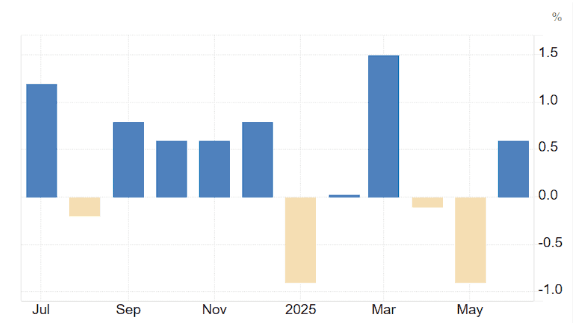






The December 2025 participation rate of 65.10% compares to 65.30% in November and a 12-month average of 65.25%. This marks a subtle but consistent downward trend since the July 2025 peak of 65.40%. The data suggests a mild erosion in labor market engagement, reversing gains seen in the first half of the year.
Seasonal adjustments and demographic shifts partly explain the decline, but tighter financial conditions and cautious employer hiring also play roles. The participation rate remains above the 2024 lows near 64.70%, indicating resilience despite headwinds.