
Hungary’s December 2025 Budget Balance: A Deepening Deficit Amid Rising Pressures
Hungary’s latest budget balance for December 2025 posted a deficit of -403 billion HUF, significantly wider than the -339 billion HUF in November and well below the -240 billion HUF consensus estimate. This marks the largest monthly shortfall in over a year, reflecting mounting fiscal pressures amid slowing growth and external uncertainties. The widening gap raises questions about fiscal sustainability and monetary policy responses in the near term.
Table of Contents
Hungary’s budget balance for December 2025 deteriorated sharply to -403 billion HUF, according to the latest release from the Sigmanomics database. This figure is 18.90% worse than November’s -339 billion HUF and 67.90% below the market consensus of -240 billion HUF. The fiscal shortfall now stands as the largest monthly deficit recorded since August 2024, when a -12.80 billion HUF deficit was reported, marking a clear reversal from the improving trend seen earlier this year.
Drivers this month
- Higher-than-expected government spending on social programs and infrastructure.
- Lower tax revenues amid slowing economic growth and subdued consumption.
- Rising debt servicing costs due to recent hikes in global interest rates.
Policy pulse
The current deficit level exceeds the Hungarian government’s fiscal target for 2025, which aimed to keep the budget gap below 3% of GDP. The widening shortfall pressures policymakers to consider either spending cuts or revenue enhancements, though political constraints and external risks complicate such moves.
Market lens
Immediate reaction: The Hungarian forint (HUF) weakened by 0.40% against the euro within the first hour of the print, reflecting investor concerns over fiscal discipline. Short-term government bond yields rose by 15 basis points, signaling increased risk premia.
Hungary’s macroeconomic backdrop remains mixed as core indicators signal moderate growth but rising inflationary pressures. GDP growth slowed to an annualized 2.10% in Q3 2025, down from 3.00% in Q2, while inflation held steady at 6.50% YoY, above the central bank’s 3% target. Unemployment remained stable at 3.80%, but wage growth accelerated to 7.20%, squeezing corporate margins and consumer purchasing power.
Monetary Policy & Financial Conditions
The Magyar Nemzeti Bank (MNB) maintained its key policy rate at 9.75% in early December, signaling a cautious stance amid persistent inflation and fiscal slippage. Financial conditions tightened as 2-year government bond yields climbed to 8.10%, up from 7.60% last month, reflecting market concerns over fiscal sustainability and external vulnerabilities.
Fiscal Policy & Government Budget
The December budget deficit of -403 billion HUF marks a sharp deterioration compared to the -339 billion HUF in November and the -239 billion HUF in September. Year-to-date, the cumulative deficit now exceeds 3.50% of GDP, surpassing the government’s original target of 3%. This fiscal slippage is driven by elevated spending on social transfers and infrastructure, coupled with weaker-than-expected tax receipts.
Comparing the current print with historical data, the deficit has expanded sharply since mid-2025, reversing the improving trajectory seen in early 2025. The fiscal gap has nearly doubled compared to the average monthly deficit recorded in the first half of 2025 (-210 billion HUF). This trend is consistent with rising government expenditures and subdued revenue growth.
This chart reveals a clear upward trend in Hungary’s fiscal deficit over the past six months, indicating mounting fiscal stress. The sharp deterioration in December suggests that without corrective measures, the budget gap could widen further, increasing borrowing costs and complicating monetary policy efforts.
Market lens
Immediate reaction: Hungarian government bond yields rose sharply by 15 basis points, reflecting increased risk premiums. The forint depreciated 0.40% against the euro, signaling investor caution. Equity markets showed mild negative sentiment, with the BUX index down 0.70% in early trading.
Looking ahead, Hungary faces a complex fiscal and macroeconomic environment. The widening budget deficit raises concerns about debt sustainability and inflationary pressures. Policymakers must balance fiscal consolidation with growth support amid external uncertainties, including geopolitical tensions and volatile commodity prices.
Bullish scenario (25% probability)
- Fiscal consolidation measures implemented swiftly, reducing the deficit to below 3% of GDP by mid-2026.
- Economic growth rebounds to 3.50% YoY, boosting tax revenues and improving fiscal metrics.
- Monetary policy remains accommodative, supporting investment and consumption.
Base scenario (50% probability)
- Deficit remains elevated around 3.50-4% of GDP through 2026 due to moderate growth and persistent spending pressures.
- Inflation gradually declines toward the 3% target by late 2026, allowing cautious monetary easing.
- External risks moderate but remain a source of volatility.
Bearish scenario (25% probability)
- Fiscal slippage worsens, pushing the deficit above 4.50% of GDP amid rising social spending and weaker revenues.
- Inflation remains sticky above 6%, forcing further monetary tightening and raising borrowing costs.
- Geopolitical shocks disrupt trade and capital flows, exacerbating fiscal and financial stress.
Hungary’s December 2025 budget balance signals a clear warning: fiscal pressures are intensifying amid a challenging macroeconomic backdrop. The sharp deficit increase demands decisive policy action to restore confidence and ensure sustainable growth. While risks remain balanced, the government’s ability to manage spending and bolster revenues will be critical in shaping Hungary’s economic trajectory in 2026.
Key Markets Likely to React to Budget Balance
The budget balance release is expected to influence several key markets. The Hungarian forint (HUF) typically reacts sensitively to fiscal news, as do Hungarian government bonds. Equity markets, particularly the BUX index, may also reflect investor sentiment shifts. Additionally, regional currency pairs like EURHUF and USDHUF will likely see volatility. Finally, broader European bond markets could adjust yields in response to Hungary’s fiscal outlook.
- EURHUF – Sensitive to Hungary’s fiscal and monetary policy shifts.
- USDHUF – Reflects risk sentiment and capital flows related to Hungary.
- BUX – Hungary’s main equity index, impacted by fiscal and economic outlook.
- MOL – Major Hungarian energy stock, sensitive to macroeconomic conditions.
- BTCUSD – Reflects broader risk appetite shifts that may follow fiscal news.
Indicator vs. EURHUF Since 2020
Since 2020, Hungary’s budget balance and the EURHUF exchange rate have shown a moderate inverse correlation. Periods of widening deficits often coincide with HUF depreciation against the euro. For example, the 2025 fiscal deterioration aligns with a 4% depreciation in EURHUF over the past six months, underscoring the sensitivity of Hungary’s currency to fiscal health.
FAQs
- What does Hungary’s December 2025 budget balance indicate?
- The -403 billion HUF deficit signals rising fiscal pressures and a potential challenge to Hungary’s fiscal targets.
- How does the budget balance affect Hungary’s economy?
- A larger deficit can increase borrowing costs, pressure the currency, and complicate monetary policy efforts.
- What are the risks for Hungary’s fiscal outlook?
- Risks include slower growth, inflation persistence, and external shocks that could worsen the deficit.
Takeaway: Hungary’s December 2025 budget deficit surge demands urgent fiscal recalibration to maintain macroeconomic stability and investor confidence.
This has been drafted with AI assistance and then thoroughly reviewed, refined, and approved by our human editorial team to ensure accuracy, and originality.
Updated 12/8/25
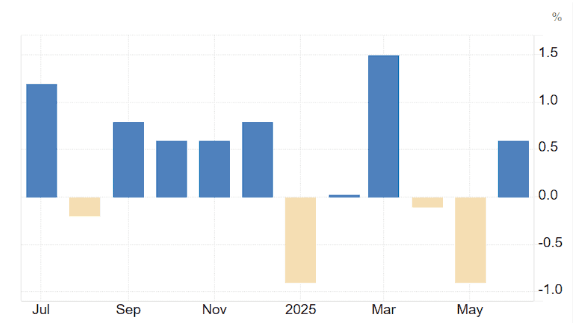




The December 2025 budget balance of -403 billion HUF is a significant deterioration from November’s -339 billion HUF and well below the 12-month average deficit of -210 billion HUF. This marks the steepest monthly deficit since August 2024, when the deficit was a modest -12.80 billion HUF. The trend reversal highlights growing fiscal pressures amid a challenging economic environment.
Key figure: The deficit widened by 64 billion HUF month-over-month, a 19% increase in the shortfall, signaling a rapid deterioration in fiscal health.