
Hungary's Inflation Rate YoY for November 2025 Eases to 3.80%
Hungary’s inflation rate for November 2025 slowed to 3.80%, below estimates and down from October’s 4.30%. This marks a notable easing trend amid tightening monetary policy and moderating external pressures. The data signals a potential shift in macroeconomic dynamics, with implications for fiscal strategy and financial markets.
Table of Contents
Hungary’s inflation rate for November 2025 registered at 3.80% year-over-year (YoY), according to the latest release from the Sigmanomics database. This figure came in below the market consensus of 4.00% and represents a decline from October’s 4.30% reading. The easing inflation marks a continuation of the downward trend observed since mid-2025, when inflation peaked at 5.60% in March.
Drivers this month
- Energy prices stabilized after summer volatility, contributing -0.30 percentage points (pp) to the inflation slowdown.
- Food inflation moderated to 2.50% YoY, down from 3.10% in October, easing pressure on household budgets.
- Core inflation components, excluding volatile items, held steady at around 3.90%, indicating persistent underlying price pressures.
Policy pulse
The November inflation rate remains above the Hungarian National Bank’s (MNB) target band of 2-3%, but the downward momentum supports the central bank’s recent decision to pause interest rate hikes. The current 13.00% base rate, one of the highest in the EU, appears to be tempering demand-driven inflation without triggering recession fears.
Market lens
Immediate reaction: The Hungarian forint (HUF) strengthened modestly against the euro, appreciating 0.40% in the first hour post-release. Short-term government bond yields declined by 5 basis points, reflecting eased inflation concerns.
Examining Hungary’s core macroeconomic indicators alongside inflation reveals a nuanced picture. GDP growth for Q3 2025 was revised upward to 3.10% YoY, supported by resilient domestic consumption and export recovery. Unemployment remained low at 3.90%, sustaining wage growth pressures that could feed into inflation.
Monetary policy & financial conditions
The MNB’s aggressive monetary tightening since early 2025, including a peak policy rate of 13.00%, has begun to moderate credit growth. Lending to households slowed to 4.20% YoY in November, down from 5.10% in September. Inflation expectations for 2026 have also declined, with market-based breakeven rates falling to 3.50% from 4.10% three months ago.
Fiscal policy & government budget
Hungary’s fiscal stance remains moderately expansionary, with the government targeting a 3.80% deficit of GDP in 2025. Increased social transfers and infrastructure spending continue to support demand, but the government has signaled intent to tighten fiscal discipline in 2026 to complement monetary efforts.
External shocks & geopolitical risks
Global commodity prices have stabilized, reducing imported inflation risks. However, ongoing geopolitical tensions in Eastern Europe and energy supply uncertainties pose downside risks. The EU’s evolving regulatory environment and trade relations also remain key external factors influencing inflation dynamics.
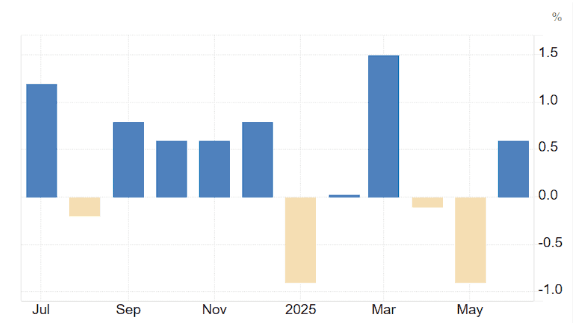
What This Chart Tells Us
The inflation trend is clearly trending downward, breaking a five-month plateau. This suggests that Hungary’s monetary tightening and external price stabilization are gaining traction. However, persistent core inflation signals that underlying price pressures remain, warranting cautious monitoring.
Market lens
Immediate reaction: The HUF strengthened modestly, while 2-year government bond yields declined by 5 basis points. Inflation-linked securities saw increased demand, reflecting improved inflation outlooks.
Looking ahead, Hungary’s inflation trajectory depends on several interacting factors. The base case scenario (60% probability) foresees inflation stabilizing around 3.50-4.00% in early 2026, supported by continued monetary restraint and moderate wage growth.
Bullish scenario (20% probability)
- Faster-than-expected global disinflation and energy price declines push inflation below 3.00% by mid-2026.
- Fiscal consolidation accelerates, reducing demand pressures.
- Core inflation eases as supply bottlenecks resolve.
Bearish scenario (20% probability)
- Geopolitical shocks disrupt energy supplies, reigniting inflation above 5.00%.
- Wage pressures intensify amid tight labor markets.
- Monetary policy loosens prematurely, fueling demand-driven price rises.
Policy pulse
The MNB is likely to maintain a cautious stance, balancing inflation risks against growth concerns. Market expectations suggest the policy rate will remain near current levels through Q1 2026, with potential cuts only if inflation falls sustainably below target.
November’s inflation data from the Sigmanomics database confirms a meaningful easing in Hungary’s price pressures. While headline inflation fell to 3.80%, core inflation remains elevated, underscoring persistent structural challenges. The interplay of monetary policy, fiscal discipline, and external factors will shape Hungary’s inflation path in 2026.
Financial markets have responded positively to the data, with the forint strengthening and bond yields declining. However, vigilance is warranted given geopolitical uncertainties and potential supply shocks. Overall, the inflation outlook is cautiously optimistic, with a gradual return to the MNB’s target range plausible over the next year.
Key Markets Likely to React to Inflation Rate YoY
The Hungarian inflation rate is a critical barometer for several asset classes. The HUFEUR currency pair typically reacts to inflation surprises, as inflation influences monetary policy and currency valuation. The MOL stock, Hungary’s largest oil and gas company, is sensitive to energy-driven inflation trends. The HUFUSD pair also tracks inflation dynamics through interest rate differentials. On the crypto front, BTCUSD often serves as an inflation hedge, while the OTP bank stock reflects financial sector sentiment amid inflation shifts.
Since 2020, Hungary’s inflation rate and MOL’s stock price have shown a positive correlation, particularly during periods of rising energy prices. Inflation spikes typically coincide with MOL’s share price gains, reflecting the company’s exposure to commodity markets. The recent easing in inflation may temper MOL’s momentum, signaling a potential cooling phase for energy-linked equities.
FAQ
- What is the current inflation rate YoY for Hungary?
- The inflation rate for November 2025 is 3.80% YoY, down from 4.30% in October.
- How does this inflation reading affect Hungary’s monetary policy?
- The easing inflation supports the MNB’s pause in rate hikes, though core inflation remains above target, suggesting cautious policy ahead.
- What are the main risks to Hungary’s inflation outlook?
- Key risks include geopolitical shocks impacting energy prices, persistent wage pressures, and potential fiscal loosening.
Takeaway: Hungary’s November 2025 inflation print signals a turning point, with easing headline inflation offering relief but core pressures demanding continued vigilance.
Updated 12/9/25
This has been drafted with AI assistance and then thoroughly reviewed, refined, and approved by our human editorial team to ensure accuracy, and originality.




Hungary’s inflation rate for November 2025 at 3.80% YoY contrasts with October’s 4.30% and the 12-month average of 4.50%. This marks a clear reversal from the persistent 4.30% plateau observed from August through November. The downward shift is driven by easing energy and food prices, while core inflation remains sticky.
Comparing recent months, inflation peaked at 5.60% in March 2025, then steadily declined through May (4.20%), before stabilizing mid-year. The November print is the lowest since February’s 5.50%, signaling a meaningful deceleration in price growth.