
US Federal Reserve Balance Sheet: December 2025 Update and Macro Implications
Key takeaways: The Fed’s balance sheet contracted slightly to $6.54 trillion in early December, marking a steady decline from $6.61 trillion in late September. This ongoing shrinkage reflects continued monetary tightening amid persistent inflation pressures. Financial conditions remain tight, with government borrowing costs edging higher. External geopolitical tensions and fiscal deficits add complexity to the outlook. Market sentiment shows cautious optimism, but risks of volatility persist. Structural trends suggest a gradual normalization of Fed assets, with implications for liquidity and credit availability.
Table of Contents
The Federal Reserve’s balance sheet stood at $6.54 trillion as of December 4, 2025, down from $6.55 trillion in late November and $6.61 trillion in late September, according to the latest data from the Sigmanomics database. This marks a 1.05% contraction over the past two months and a 2.50% decline year-over-year, continuing the trend of quantitative tightening initiated in 2022.
Drivers this month
- Ongoing runoff of Treasury securities and mortgage-backed securities (MBS) from the Fed’s holdings.
- Moderate reduction in overnight reverse repurchase agreements (ON RRPs).
- Stable but cautious liquidity demand from commercial banks amid tighter monetary policy.
Policy pulse
The balance sheet contraction aligns with the Federal Reserve’s stated goal of reducing excess liquidity to combat inflation. The current size remains well above the pre-pandemic level of approximately $4.20 trillion, reflecting a cautious approach to normalization.
Market lens
Immediate reaction: The US dollar index (USD) strengthened by 0.30% within the first hour of the release, while 2-year Treasury yields rose 5 basis points, signaling market anticipation of continued Fed tightening.
Core macroeconomic indicators provide context for the Fed’s balance sheet movements. Inflation remains elevated at 3.80% year-over-year, down from 4.20% six months ago but still above the Fed’s 2% target. Unemployment holds steady at 3.60%, near historic lows, supporting consumer spending and wage growth.
Monetary Policy & Financial Conditions
The Federal Reserve’s benchmark interest rate currently sits at 5.25%, unchanged since October. Financial conditions have tightened, with the Bloomberg US Financial Conditions Index down 0.40 points month-over-month. Credit spreads have widened slightly, reflecting increased risk aversion.
Fiscal Policy & Government Budget
The US government deficit remains elevated at $1.40 trillion annually, driven by persistent spending on social programs and defense. Treasury issuance continues at a robust pace, pressuring the Fed’s balance sheet runoff and influencing long-term yields.
Drivers this month
- Runoff of Treasury securities: -$20 billion
- Mortgage-backed securities runoff: -$10 billion
- Reduction in ON RRPs: -$5 billion
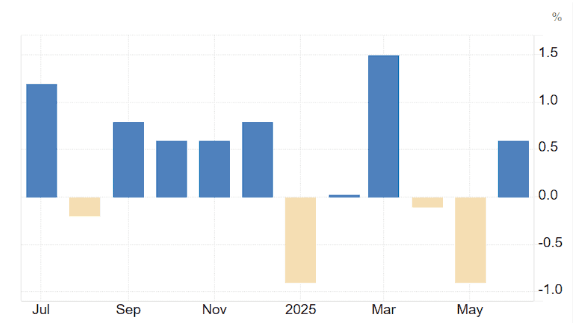
This chart highlights a clear downward trend in the Fed’s balance sheet, signaling a gradual withdrawal of liquidity from the financial system. The pace of reduction remains steady but measured, balancing inflation control with financial stability concerns.
Market lens
Immediate reaction: US Treasury yields rose modestly, with the 2-year note yield increasing by 5 basis points, reflecting market expectations of continued Fed tightening. The USD appreciated slightly, while equity markets showed muted responses.
Looking ahead, the Fed’s balance sheet trajectory will depend on inflation dynamics, economic growth, and geopolitical developments. Three scenarios emerge:
Bullish scenario (30% probability)
- Inflation falls rapidly below 2%, allowing the Fed to pause balance sheet runoff by mid-2026.
- Economic growth remains steady, supporting credit markets and reducing risk premiums.
- Geopolitical tensions ease, stabilizing global supply chains.
Base scenario (50% probability)
- Inflation gradually declines to near 2.50% by late 2026, with the Fed continuing measured balance sheet reductions.
- Moderate economic growth persists, with occasional volatility in credit markets.
- Geopolitical risks remain elevated but contained.
Bearish scenario (20% probability)
- Inflation remains sticky above 3%, forcing the Fed to accelerate tightening and balance sheet shrinkage.
- Economic growth slows sharply, increasing default risks and market volatility.
- Geopolitical shocks disrupt energy and commodity markets, exacerbating inflation.
The Fed’s balance sheet contraction continues at a steady pace, reflecting a cautious but determined approach to monetary normalization. While this reduces excess liquidity, it also tightens financial conditions, influencing credit availability and borrowing costs. Policymakers must balance inflation control with growth risks amid a complex global backdrop.
Structural trends suggest the balance sheet will stabilize near $6 trillion over the next 18–24 months, barring major shocks. Market participants should monitor inflation signals, fiscal policy shifts, and geopolitical developments closely to anticipate Fed actions and adjust portfolios accordingly.
Key Markets Likely to React to Fed Balance Sheet
The Fed’s balance sheet size is a critical indicator for markets sensitive to liquidity and interest rates. Changes often influence Treasury yields, the US dollar, and risk assets. Below are five tradable symbols historically correlated with Fed balance sheet movements:
- SPY – Tracks US equities sensitive to monetary policy shifts.
- USDEUR – Reflects currency market reactions to Fed liquidity changes.
- USDJPY – Influenced by interest rate differentials and Fed balance sheet moves.
- BTCUSD – Cryptocurrency often reacts to liquidity and risk sentiment shifts.
- TLT – Long-term Treasury ETF sensitive to Fed asset purchases and sales.
Fed Balance Sheet vs. SPY Since 2020
Since 2020, the Fed’s balance sheet expansion correlated strongly with SPY’s upward trend, reflecting liquidity-driven equity gains. The recent balance sheet contraction coincides with increased volatility and a plateau in SPY performance. This relationship underscores the importance of Fed asset management in equity market dynamics.
Frequently Asked Questions
- What is the Fed Balance Sheet?
- The Fed Balance Sheet represents the total assets held by the Federal Reserve, including Treasury securities and mortgage-backed securities, reflecting monetary policy stance.
- How does the Fed Balance Sheet affect inflation?
- Changes in the balance sheet influence liquidity and credit conditions, which can either fuel or restrain inflation depending on expansion or contraction.
- Why monitor the Fed Balance Sheet?
- It provides insight into monetary policy direction, financial conditions, and potential market impacts, aiding investment and policy decisions.
Takeaway: The Fed’s balance sheet contraction signals a continued shift toward monetary normalization, balancing inflation control with financial stability risks.
This has been drafted with AI assistance and then thoroughly reviewed, refined, and approved by our human editorial team to ensure accuracy, and originality.





The Fed’s balance sheet contracted to $6.54 trillion in early December, down from $6.55 trillion last month and below the 12-month average of $6.58 trillion. This steady decline reflects ongoing quantitative tightening efforts.
Compared to the peak of $8.90 trillion in early 2022, the current level represents a 26.50% reduction, underscoring the Fed’s commitment to normalizing monetary policy after pandemic-era expansions.