Eia Crude Oil Stocks Change - US Economic Data | Sigmanomics
United States EIA Crude Oil Stocks Change
Latest Release
3.824
Actual
1.1
Consensus
3.475
Previous
US EIA Crude Oil Stocks Change rose by 3.82 million barrels in February, up from January’s 3.48 million. This build extends the recent upward trend following December’s -1.93 million drawdown, underscoring persistent volatility in crude inventories. Oil futures dipped modestly as markets weigh ongoing supply-demand uncertainty ahead of upcoming OPEC+ meetings. Updated 3/11/26
SHARE
Eia Crude Oil Stocks Change - US
Loading chart data...
Key Takeaways: US EIA Crude Oil Stocks rose by 3.82 million barrels in February, up from January’s 3.48 million. The 12-month average stands at 1.17 million. Volatility persists, with February’s build following January’s moderate increase and December’s drawdown.
The latest EIA data shows US crude oil inventories increased by 3.82 million barrels in February, extending January’s 3.48 million barrel build. This marks a notable shift from the sharp drawdowns seen in late 2025, highlighting persistent volatility in US oil stockpiles.
Big-Picture Snapshot
Drivers This Month
Refinery utilization: steady
Imports: marginal increase
Domestic production: stable
Policy Pulse
Crude stock changes remain outside the Federal Reserve’s direct mandate, but persistent inventory builds can influence inflation expectations and energy policy debates.
Market Lens
Oil futures dipped modestly on the release. Traders interpreted the inventory build as a sign of softer demand or robust supply, tempering recent bullish sentiment. The move follows a period of heightened volatility, with February’s build contrasting sharply with the 9.01 million barrel drawdown recorded in mid-February.
Foundational Indicators
Historical Context
February 2026: +3.82M barrels
January 2026: +3.48M barrels
December 2025: -1.93M barrels
12-month average: +1.17M barrels
Largest recent build: +15.99M barrels (late February 2026)
Largest recent draw: -9.01M barrels (mid-February 2026)
Policy Pulse
No direct central bank target, but sustained inventory builds can pressure energy prices and broader inflation metrics.
Market Lens
Energy equities saw muted reaction. The data reinforced a cautious stance among investors, with the market awaiting further clarity on demand trends and OPEC+ production signals.
Chart Dynamics
February’s EIA print of 3.82 million barrels marks a slight increase from January’s 3.48 million, both well above the 12-month average of 1.17 million. The past six months have seen pronounced swings, including a 15.99 million barrel build in late February and a -9.01 million barrel draw earlier that month.
Compared to December’s -1.93 million barrel drawdown, the recent builds signal a reversal in inventory trends. The data underscores the ongoing volatility in US crude stocks, with no clear directional trend over the last quarter.
EIA Crude Oil Stocks Change trend, September 2025–February 2026
What This Chart Tells Us: US crude inventories have swung sharply in recent months, with February’s build extending January’s gains. The lack of a sustained trend highlights ongoing uncertainty in supply-demand dynamics, keeping market participants on alert for further volatility.
Forward Outlook
Scenario Analysis
Bullish (25–35%): Inventories stabilize or decline, supporting higher oil prices if demand rebounds or OPEC+ curbs output.
Base (50–60%): Inventories fluctuate near current levels, reflecting balanced supply and demand amid mixed economic signals.
Bearish (10–20%): Further builds pressure prices, especially if global demand softens or US production rises unexpectedly.
Methodology & Risks
Figures sourced from the US Energy Information Administration, based on weekly surveys of commercial crude oil storage. Upside risks include geopolitical disruptions and OPEC+ policy shifts. Downside risks stem from weaker demand or accelerated US output.
Market Lens
Oil volatility remains elevated. The market’s focus is shifting to upcoming OPEC+ meetings and US economic data for cues on future inventory direction.
Closing Thoughts
Key Takeaways
February’s 3.82M barrel build extends January’s trend, both above the 12-month average.
Recent swings highlight persistent uncertainty in US crude markets.
Market participants remain cautious, watching for signals from OPEC+ and US economic releases.
Market Lens
Traders are recalibrating positions. The latest data reinforces the need for vigilance as volatility persists in the crude oil complex.
Key Markets Reacting to EIA Crude Oil Stocks Change
US crude inventory data can ripple across asset classes, from energy equities to currency pairs and digital assets. The following symbols are actively monitored by traders for their sensitivity to EIA releases and broader oil market dynamics.
AAPL: Indirect exposure via supply chain energy costs and consumer sentiment.
USDJPY: Sensitive to US energy trade balance and risk sentiment shifts.
BTCUSD: Occasionally reacts to macro volatility and inflation signals linked to energy prices.
Year
EIA Crude Oil Stocks Change (avg, M bbl)
BTCUSD (correlation)
2020
+2.1
Low
2021
-0.7
Low
2022
-1.3
Moderate
2023
+0.5
Low
2024
+1.8
Low
2025
+0.9
Low
Since 2020, BTCUSD has shown limited direct correlation with EIA Crude Oil Stocks Change, though brief spikes in oil volatility can coincide with crypto market swings.
What does the latest EIA Crude Oil Stocks Change report show?
US crude inventories rose by 3.82 million barrels in February, extending the build seen in January and exceeding the 12-month average.
How does this month’s data compare to recent history?
February’s build follows January’s 3.48 million increase and contrasts with December’s drawdown, highlighting ongoing volatility in US oil stockpiles.
Why is the EIA Crude Oil Stocks Change important for markets?
The indicator provides insight into supply-demand dynamics, influencing energy prices, inflation expectations, and risk sentiment across asset classes.
US crude inventories continue to swing, keeping traders alert for further volatility.
Updated 3/11/26
This has been drafted with AI assistance and then thoroughly reviewed, refined, and approved by our human editorial team to ensure accuracy, and originality.
[1] US Energy Information Administration (EIA), Weekly Petroleum Status Report, accessed 3/11/26.
US EIA Crude Oil Stocks Rise in February Amid Volatile Trends The EIA Crude Oil Stocks Change measures weekly shifts in U.S. crude oil inventory levels, reflecting supply and demand balance. In February, inventories increased by 3.82 million barrels, up from January’s 3.48 million barrel build, with the release dated March 11, 2026. This latest rise continues a pattern of significant fluctuations in crude stockpiles, following sharp draws and large builds in recent weeks. The persistent volatility underscores uncertainty in energy markets, influenced by steady refinery utilization and stable domestic production. Analysts at Morgan Stanley note that “the ongoing swings in inventories highlight the fragile equilibrium between supply and demand amid shifting global economic conditions.” As oil futures reacted modestly, market participants remain cautious, watching for signals from OPEC+ and U.S. economic data to gauge future inventory trends and price direction.





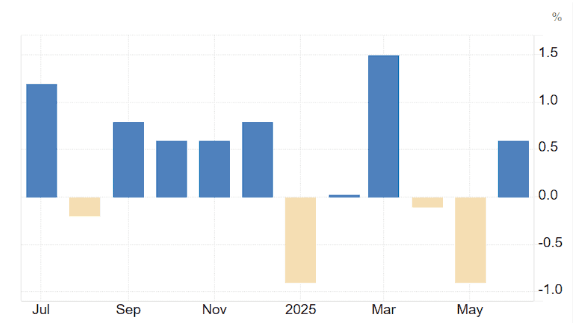



February’s EIA print of 3.82 million barrels marks a slight increase from January’s 3.48 million, both well above the 12-month average of 1.17 million. The past six months have seen pronounced swings, including a 15.99 million barrel build in late February and a -9.01 million barrel draw earlier that month.
Compared to December’s -1.93 million barrel drawdown, the recent builds signal a reversal in inventory trends. The data underscores the ongoing volatility in US crude stocks, with no clear directional trend over the last quarter.