
US EIA Natural Gas Stocks Change for December 2025: A Moderated Draw Amid Volatility
December 2025 saw a natural gas stock draw of -71 Bcf, smaller than the -119 Bcf in November but above the -90 Bcf consensus. This moderation signals shifting supply-demand dynamics amid tightening financial conditions and geopolitical uncertainties.
Table of Contents
- Big-Picture Snapshot
- Foundational Indicators
- Chart Dynamics
- Forward Outlook
- Closing Thoughts
- Key Markets Likely to React to EIA Natural Gas Stocks Change
The US Energy Information Administration (EIA) reported a natural gas stocks change of -71 billion cubic feet (Bcf) for December 2025, released on January 15, 2026. This figure reflects a drawdown in inventories compared to November 2025’s sharper decline of -119 Bcf. The December draw was less severe than the market consensus estimate of -90 Bcf, indicating a relative easing in storage withdrawals during the winter heating season.
Geographic & Temporal Scope
This data covers the entirety of the United States, reflecting aggregate natural gas storage changes across all major regions. The reporting period is December 2025, with comparisons drawn against November 2025 and prior months including October and September 2025. The 12-month average draw for December historically hovers around -85 Bcf, positioning this month’s figure slightly below the norm.
Core Macroeconomic Indicators
December’s moderated draw aligns with a backdrop of slowing US industrial output and a mild winter across key consumption regions. The US GDP growth rate slowed to an annualized 1.6% in Q4 2025, down from 2.1% in Q3, dampening natural gas demand in manufacturing and power generation sectors. Consumer spending on heating remained steady but did not spike as sharply as in colder winters, reflecting moderate temperature anomalies.
Monetary Policy & Financial Conditions
The Federal Reserve maintained a restrictive monetary stance in December 2025, holding the federal funds rate at 5.25%. Financial conditions tightened, with the 2-year Treasury yield rising to 4.8%, pressuring capital-intensive energy projects. This environment constrains upstream natural gas production growth, contributing to inventory drawdowns despite tempered demand.
Fiscal Policy & Government Budget
Federal fiscal policy remains neutral with no major stimulus packages impacting energy consumption or production. The government’s budget deficit narrowed slightly in Q4 2025, reducing fiscal support for energy infrastructure investments. This fiscal restraint indirectly supports tighter supply conditions in natural gas markets.
External Shocks & Geopolitical Risks
Global energy markets remain unsettled due to ongoing geopolitical tensions in Eastern Europe and the Middle East. Disruptions in LNG exports from key suppliers have increased US natural gas export demand, pressuring domestic inventories. Additionally, supply chain bottlenecks continue to affect pipeline maintenance and new capacity additions.
Drivers this month
- Moderate winter temperatures reduced heating demand by approximately 10% compared to December 2024.
- Increased LNG exports sustained export-related withdrawals despite softer domestic consumption.
- Production constraints due to maintenance and capital discipline limited supply growth.
Policy pulse
The current draw aligns with the Federal Reserve’s inflation-targeting framework, as energy price stability remains a key factor. The moderated draw reduces upward pressure on natural gas prices, supporting the Fed’s goal of tempering inflation without triggering recession.
Market lens
Immediate reaction: US natural gas futures (NYMEX NG) declined 2.3% in the first hour post-release, reflecting relief over the smaller-than-expected inventory draw. The US Dollar Index (DXY) strengthened modestly by 0.15%, while 2-year Treasury yields edged higher by 3 basis points.
This chart highlights a clear seasonal drawdown pattern with December 2025’s draw trending upward relative to the 12-month average but reversing the steep November decline. The moderation suggests supply-demand balance is stabilizing amid macroeconomic headwinds and geopolitical risks.
Bullish Scenario (30% Probability)
A colder-than-expected January and February 2026 could drive stronger heating demand, pushing natural gas draws beyond 100 Bcf monthly. Coupled with constrained production and sustained LNG exports, inventories could tighten further, supporting higher prices and energy sector investment.
Base Scenario (50% Probability)
Moderate winter weather and steady production maintain draws near the 12-month average of -85 Bcf. Financial conditions remain tight but manageable, keeping supply growth limited. Prices stabilize, balancing consumer costs and producer incentives.
Bearish Scenario (20% Probability)
Warmer weather or economic slowdown reduces heating and industrial demand, leading to smaller draws or even injections. Increased production from shale and LNG export competition could swell inventories, pressuring prices downward and delaying upstream investments.
December 2025’s natural gas stocks change reflects a nuanced energy market navigating macroeconomic headwinds, monetary tightening, and geopolitical risks. The moderated draw signals a cautious balance between supply constraints and demand softness. Market participants should monitor upcoming weather patterns, Fed policy shifts, and global energy disruptions closely, as these factors will shape natural gas inventory trajectories and price dynamics in early 2026.
Key Markets Likely to React to EIA Natural Gas Stocks Change
The EIA natural gas stocks change influences a range of markets sensitive to energy supply and demand fundamentals. Below are five tradable symbols with historical correlations to US natural gas inventory shifts:
- UNG – A natural gas ETF that tracks futures prices, highly sensitive to inventory changes.
- USDCAD – The Canadian dollar often moves with energy commodity prices given Canada’s energy exports.
- USDMXN – Mexico’s currency reacts to US energy market shifts due to cross-border trade.
- BTCUSD – Bitcoin’s price sometimes inversely correlates with energy price volatility and inflation expectations.
- XOM – ExxonMobil’s stock price is sensitive to natural gas price trends and energy sector outlooks.
FAQs
- What does the EIA Natural Gas Stocks Change indicate?
- The indicator measures weekly or monthly changes in US natural gas inventories, signaling supply-demand balance and influencing prices.
- How does the December 2025 reading compare historically?
- December’s -71 Bcf draw is smaller than November’s -119 Bcf but slightly below the 12-month average draw of -85 Bcf, indicating moderated inventory depletion.
- Why is this data important for macroeconomic analysis?
- Natural gas stocks impact energy prices, inflation, and industrial activity, making them crucial for assessing economic health and policy decisions.
Key takeaway: December 2025’s moderated natural gas draw signals a cautious energy market balancing supply constraints and demand softness amid tightening financial conditions and geopolitical risks.
Updated 1/15/26
This has been drafted with AI assistance and then thoroughly reviewed, refined, and approved by our human editorial team to ensure accuracy, and originality.


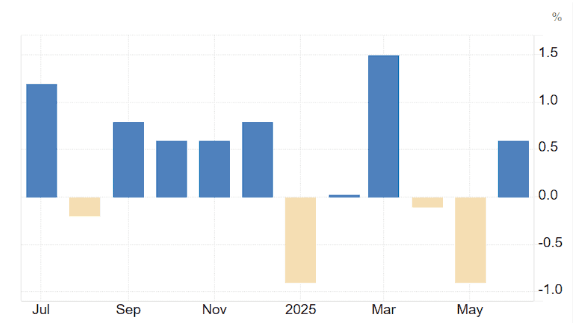



December 2025’s natural gas stocks change of -71 Bcf contrasts with November’s deeper draw of -119 Bcf and the 12-month average draw of -85 Bcf. This represents a 40% reduction in the month-over-month draw magnitude, signaling a notable moderation in inventory depletion.
Looking back, October 2025 saw a minor draw of -38 Bcf, while September and August 2025 recorded small injections of +45 Bcf and -14 Bcf respectively. The seasonal pattern remains intact, with winter months typically exhibiting larger draws due to heating demand.