ISM Manufacturing Employment - US Economic Data | Sigmanomics
United States ISM Manufacturing Employment
Latest Release
48.8
Actual
48
Consensus
48.1
Previous
The US ISM Manufacturing Employment for January 2026 surprised to the upside with an actual reading of 48.10, beating estimates of 44.80 and rising sharply from December’s 44.90. Although still below the 50 expansion threshold, this 3.20-point month-over-month increase signals a moderating contraction and the strongest print since May 2025. If this momentum continues, it may delay Fed rate cuts and bolster confidence in a manufacturing labor market recovery. Updated 2/2/26
SHARE
ISM Manufacturing Employment - US
Loading chart data...
US ISM Manufacturing Employment Surges in January 2026: Strongest Print Since May 2025
Key Takeaways: January 2026’s ISM Manufacturing Employment Index jumped to 48.1, up sharply from December’s 44.9 and beating consensus estimates of 44.8. This marks the highest reading since May 2025, signaling a potential inflection in US factory labor demand. The rebound, if sustained, could reshape expectations for Fed policy and labor market resilience.
The ISM Manufacturing Employment Index for January 2026 posted a robust 48.1, according to the latest release from the Sigmanomics database[1]. This is a notable acceleration from December 2025’s 44.9 and well above consensus expectations of 44.8. The January print is the highest since May 2025 (46.5), and breaks a string of sub-46 readings that had persisted since August 2025.
Drivers this month
Broad-based hiring uptick across durable goods and select technology sub-sectors.
Improved supplier delivery times and inventory restocking contributed to increased labor demand.
Temporary easing of input cost pressures supported hiring plans.
Policy pulse
The January reading remains below the 50.0 threshold that signals outright expansion, but the sharp MoM gain suggests contraction in manufacturing employment is moderating. This could complicate the Federal Reserve’s calculus as it weighs the timing and magnitude of potential rate cuts in 2026.
Market lens
Immediate reaction: USDJPY spiked 0.3% and S&P 500 futures rose 0.4% in the hour after the print. Markets interpreted the data as a sign that US manufacturing may be bottoming, reducing recession risks and tempering aggressive Fed easing bets.
The ISM Manufacturing Employment Index is a diffusion index, with readings above 50 indicating expansion and below 50 signaling contraction. January’s 48.1, while still contractionary, marks a decisive improvement from December’s 44.9 and November’s 44.0. The 12-month average stands at 45.7, underscoring the significance of January’s upside surprise.
For context, the index had languished below 47 for six consecutive months (August 2025: 43.4; September: 43.8; October: 45.3; November: 46.0; December: 44.0; January: 44.9), reflecting persistent labor market softness in manufacturing. Year-on-year, January 2026’s reading is up 4.1 points from January 2025’s 44.0, the strongest YoY gain since early 2023.
Drivers this month
Rebound in new orders and production indices, both of which rose above 50 in January.
Seasonal hiring in electronics and automotive components.
Reduced layoff announcements compared to Q4 2025.
Policy pulse
The improvement in manufacturing employment, if sustained, could delay the Fed’s anticipated rate cuts. Policymakers will likely scrutinize February and March data for confirmation before shifting their stance.
Market lens
Bond yields rose modestly post-release, with the US 2-year Treasury yield up 5 basis points, reflecting diminished expectations for near-term monetary easing.
January 2026’s ISM Manufacturing Employment Index surged to 48.1, up from December 2025’s 44.9 and well above the 12-month average of 45.7. This marks the first meaningful rebound since May 2025 and interrupts a prolonged period of contraction.
The chart below illustrates the index’s trajectory over the past year, highlighting the sharp MoM acceleration in January. The index had trended downward from May’s 46.5 to a trough of 43.4 in August, before stabilizing in the mid-40s. January’s print signals a possible inflection point.
ISM Manufacturing Employment Index (May 2025 – Jan 2026)
  50 ┤
     │
  48 ┤           ╭─
     │           │
  46 ┤╭─╮        │
     ││ │        │
  44 ┤│ │╭─╮╭─╮╭─╯
     ││ ││ ││ ││
  42 ┤╯ ╰╯ ╰╯ ╰╯
     └────────────────────
     May Jun Aug Sep Oct Nov Dec Jan
What This Chart Tells Us: The January 2026 surge to 48.1 reverses a six-month contraction trend, suggesting US manufacturing employment may be bottoming out. Sustained improvement could signal a broader industrial recovery.
Drivers this month
Strong rebound in Midwest and Southeast regional hiring.
Improved export demand for capital goods.
Stabilization in energy and raw material prices.
Policy pulse
The index’s move toward the 50 threshold will be closely watched by the Fed. If February’s data confirm the uptrend, policymakers may delay rate cuts to avoid reigniting inflationary pressures.
Market lens
Immediate reaction: USDJPY spiked 0.3% and S&P 500 futures rose 0.4% in the hour after the print. The dollar’s strength reflects shifting rate expectations, while equities welcomed the improved growth outlook.
Looking ahead, the ISM Manufacturing Employment Index’s January rebound raises the probability of a cyclical upturn in US factory hiring. However, risks remain, including potential external shocks, lingering supply chain disruptions, and uncertainty around fiscal policy as the 2026 budget cycle unfolds.
Scenario probabilities
Bullish (30%): Index rises above 50 by March 2026, signaling expansion and supporting a broad-based manufacturing recovery.
Base (55%): Index stabilizes in the 46–49 range through Q1, with modest job gains and gradual improvement in sentiment.
Bearish (15%): January’s rebound proves transitory, with the index slipping back below 45 due to renewed global headwinds or domestic fiscal tightening.
Policy pulse
The Fed is likely to adopt a wait-and-see approach, seeking confirmation of a sustained uptrend before adjusting its policy path. Fiscal stimulus or infrastructure spending could provide further tailwinds if enacted.
Market lens
Equities and cyclical sectors may outperform if manufacturing employment continues to recover. The dollar could remain firm, while bond yields may drift higher as rate cut bets are pared back.
January 2026’s ISM Manufacturing Employment Index marks a pivotal moment for US industry, with the strongest reading in eight months and a clear break from the late-2025 doldrums. While the index remains below the expansion threshold, the momentum shift is unmistakable. Investors, policymakers, and business leaders will be watching closely for confirmation in the coming months, as the trajectory of factory hiring will shape the broader macroeconomic outlook for 2026.
Key Markets Likely to React to ISM Manufacturing Employment
Movements in the ISM Manufacturing Employment Index often ripple through US equities, currency pairs, and even crypto markets. Below are five tradable symbols whose prices historically track or respond to shifts in US manufacturing employment, each selected from Sigmanomics’ curated market pages:
SPY (S&P 500 ETF): Tends to rise on strong manufacturing labor data, reflecting improved growth prospects.
DOW (Dow Inc.): Sensitive to US industrial and manufacturing cycles.
USDJPY (US Dollar/Japanese Yen): Strengthens on robust US data, as rate expectations shift.
EURUSD (Euro/US Dollar): Often falls when US manufacturing surprises to the upside.
BTCUSD (Bitcoin/US Dollar): Sometimes rallies on US macro volatility, though correlation is less direct.
Insight Box:
Month
ISM Employment
SPY Close
Jan 2024
44.0
420.5
May 2025
46.5
445.2
Aug 2025
43.4
432.1
Jan 2026
48.1
459.8
Since 2020, SPY has shown a moderate positive correlation with ISM Manufacturing Employment. Notably, sharp rebounds in the index (e.g., May 2025 and January 2026) have coincided with equity rallies, underscoring the market’s sensitivity to US factory labor trends.
FAQ: US ISM Manufacturing Employment Surges in January 2026: Strongest Print Since May 2025
Q1: What does the January 2026 ISM Manufacturing Employment Index reveal about the US economy?
A1: January’s 48.1 reading signals a strong rebound in factory hiring, suggesting US manufacturing may be stabilizing after months of contraction.
Q2: How did markets react to the latest ISM Manufacturing Employment data?
A2: The US dollar and equities rose, while bond yields climbed as investors dialed back expectations for imminent Fed rate cuts.
Q3: What are the main risks to the outlook for US manufacturing employment?
A3: Key risks include renewed global shocks, supply chain disruptions, and potential fiscal tightening as the 2026 budget cycle unfolds.
Bottom Line: January’s ISM Manufacturing Employment Index marks a potential turning point for US industry. Sustained improvement could reshape the macro landscape in 2026.
Author: Sigmanomics Editorial Team
This has been drafted with AI assistance and then thoroughly reviewed, refined, and approved by our human editorial team to ensure accuracy, and originality.
Updated 2/2/26
Economic Calendar - US Events
Wednesday, January 21, 2026
Actual
Previous
Consensus
Sigmanomics Rolling-Surprise Forecast
Impact
17:00
US
Atlanta Fed GDPNow
-
5.3
5.3
5.73
Medium
15:00
US
Pending Home Sales MoM
-
3.3
1.4
2.55
Medium
15:00
US
Pending Home Sales YoY
-
2.6
0.2
1.80
Medium
15:00
US
Construction Spending MoM
-
0.2
-0.1
-0.10
Low
Friday, January 16, 2026
Actual
Previous
Consensus
Sigmanomics Rolling-Surprise Forecast
Impact
15:00
US
Michigan Inflation Expectations
-
4.2
4.2
4.23
Low
15:00
US
Michigan Consumer Sentiment
-
52.9
54
54.00
High
15:00
US
Michigan Current Conditions
-
50.4
52.4
52.80
Low
15:00
US
Michigan 5 Year Inflation Expectations
-
3.2
3.4
3.47
Low
15:00
US
NAHB Housing Market Index
37
39
40
38.50
Medium
15:00
US
Michigan Consumer Expectations
-
54.6
55
55.10
Low
14:15
US
Industrial Production YoY
2
2.5
2.7
2.80
Low
14:15
US
Manufacturing Production MoM
0.2
0.3
-0.2
-0.15
Low
14:15
US
Capacity Utilization
76.3
76
76
76.08
Low
14:15
US
Manufacturing Production YoY
2
1.9
2
2.25
Low
14:15
US
Industrial Production MoM
0.4
0.2
0.1
0.13
Medium
Thursday, January 15, 2026
Actual
Previous
Consensus
Sigmanomics Rolling-Surprise Forecast
Impact
15:30
US
EIA Natural Gas Stocks Change
-71
-119
-90
-85.17
Low
13:30
US
Initial Jobless Claims
198
207
215
208.33
High
13:30
US
Import Prices MoM
0.4
0
-0.1
0.15
Medium
13:30
US
Import Prices YoY
0.1
0.3
0.4
0.25
Low
13:30
US
Import Prices YoY
-
0.3
0.5
0.35
Low
13:30
US
Import Prices MoM
-
0
0.1
0.35
Medium
13:30
US
Export Prices YoY
-
3.8
3
3.00
Low
13:30
US
Export Prices YoY
-
3.8
3
3.00
Low
13:30
US
Continuing Jobless Claims
1884
1903
1890
1883.17
High
13:30
US
NY Empire State Manufacturing Index
7.7
-3.7
1
4.35
High
13:30
US
Export Prices MoM
-
0
-0.1
-0.10
Medium
13:30
US
Philadelphia Fed Manufacturing Index
12.6
-8.8
-2
-1.65
Medium
13:30
US
Jobless Claims 4-Week Average
205
211.5
215
212.58
High
Wednesday, January 14, 2026
Actual
Previous
Consensus
Sigmanomics Rolling-Surprise Forecast
Impact
17:30
US
Atlanta Fed GDPNow
5.3
5.1
5.1
5.53
Medium
17:00
US
Atlanta Fed GDPNow
-
5.1
5.1
5.53
Medium
15:30
US
EIA Distillate Stocks Change
-0.029
5.594
-0.2
0.86
Low
15:30
US
EIA Crude Oil Stocks Change
3.391
-3.831
-2.2
-2.26
Medium
15:30
US
EIA Gasoline Stocks Change
8.977
7.702
4
6.29
Medium
15:10
US
RCM/TIPP Economic Optimism Index
-
47.9
47.4
46.90
Low
15:00
US
Existing Home Sales
4.35
4.14
4.21
4.23
High
15:00
US
Existing Home Sales MoM
5.1
0.7
-1.6
1.40
High
15:00
US
Business Inventories MoM
0.3
0.3
0.2
0.23
Medium
15:00
US
Retail Inventories Ex Autos MoM
0.3
0.1
-0.1
-0.05
Low
13:30
US
PPI Ex Food, Energy and Trade YoY
3.4
3
2.9
3.15
Low
13:30
US
Core PPI YoY
3
2.9
2.7
2.85
Low
13:30
US
Producer Price Index MoM
-
0.3
0.4
0.40
High
13:30
US
PPI Ex Food, Energy and Trade MoM
-
0.1
0.2
0.20
Low
13:30
US
Core PPI MoM
0.3
0.4
0.2
0.25
Medium
13:30
US
Core PPI YoY
-
2.6
2.7
2.85
Low
13:30
US
Producer Price Index YoY
-
2.7
2.7
2.70
Low
13:30
US
Current Account
-226.4
-249.2
-238.4
-232.40
Medium
13:30
US
Retail Sales Ex Autos MoM
0.5
0.2
0.4
0.45
High
13:30
US
Retail Sales YoY
3.3
3.3
3
3.27
High
13:30
US
Retail Sales MoM
0.6
-0.1
0.4
0.63
High
13:30
US
Retail Sales Ex Gas/Autos MoM
0.4
0.4
0.1
0.25
High
Tuesday, January 13, 2026
Actual
Previous
Consensus
Sigmanomics Rolling-Surprise Forecast
Impact
21:30
US
API Crude Oil Stock Change
5.27
-2.8
-2
-2.64
Medium
19:00
US
Monthly Budget Statement
-145
-173
-150
-147.50
Medium
19:00
US
Budget Balance
-145
-173
-144.5
-144.75
Medium
15:10
US
RCM/TIPP Economic Optimism Index
47.2
47.9
48.2
47.70
Low
15:10
US
IBD/TIPP Economic Optimism
47.2
47.9
48.2
47.70
Low
15:00
US
New Home Sales
-
800
710
710.00
High
15:00
US
New Home Sales
-
0.8
0.69
0.69
Medium
15:00
US
RCM/TIPP Economic Optimism Index
47.2
47.9
48.2
47.70
Low
13:30
US
Core Inflation Rate YoY
2.6
2.6
2.7
2.58
High
13:30
US
CPI
324.05
324.12
323.8
323.61
High
13:30
US
CPI s.a
326.03
325.031
325.7
325.87
High
13:30
US
Inflation Rate YoY
2.7
2.7
2.7
2.60
High
13:30
US
Building Permits
1.411
1.415
1.412
2.81
Low
11:00
US
NFIB Business Optimism Index
99.5
99
99.5
99.50
Low
Monday, January 12, 2026
Actual
Previous
Consensus
Sigmanomics Rolling-Surprise Forecast
Impact
17:00
US
Quarterly Grain Stocks - Corn
13.28
1.55
13.1
13.19
Low
17:00
US
Quarterly Grain Stocks - Wheat
1.68
2.13
1.65
1.67
Low
17:00
US
Quarterly Grain Stocks - Soy
3.29
0.32
3.28
3.29
Low
Friday, January 9, 2026
Actual
Previous
Consensus
Sigmanomics Rolling-Surprise Forecast
Impact
16:30
US
Atlanta Fed GDPNow
5.1
5.4
5.4
5.83
Medium
15:30
US
Atlanta Fed GDPNow
-
5.4
5.4
5.83
Medium
15:00
US
Michigan Consumer Sentiment
54
52.9
53.5
53.50
High
15:00
US
Michigan Current Conditions
52.4
50.4
50.5
50.90
Low
15:00
US
Michigan 5 Year Inflation Expectations
3.4
3.2
3.1
3.17
Low
15:00
US
Michigan Inflation Expectations
4.2
4.2
4.2
4.23
Low
15:00
US
Michigan Consumer Expectations
55
54.6
54.2
54.30
Low
15:00
US
Inflation Expectations
3.4
3.2
3.3
3.32
Medium
13:30
US
Average Hourly Earnings YoY
3.8
3.6
3.6
3.63
Medium
13:30
US
U-6 Unemployment Rate
8.4
8.7
8.8
8.60
High
13:30
US
Housing Starts
1.246
1.306
1.33
1.29
High
13:30
US
Housing Starts MoM
-4.6
1.2
0.8
-1.90
Medium
13:30
US
Building Permits
6.4
-2.3
0.8
2.20
Medium
13:30
US
Government Payrolls
13
6
-10
-4.75
Low
13:30
US
Unemployment Rate
4.4
4.5
4.5
4.53
High
13:30
US
Manufacturing Payrolls
-8
-2
-5
-5.75
Low
13:30
US
Nonfarm Payrolls Private
37
50
64
63.25
High
13:30
US
Participation Rate
62.4
62.5
62.6
62.50
Medium
13:30
US
Non Farm Payrolls
50
56
60
61.00
High
13:30
US
Average Hourly Earnings MoM
0.3
0.2
0.3
0.25
Medium
13:30
US
Average Weekly Hours
34.2
34.3
34.3
34.27
Low
Thursday, January 8, 2026
Actual
Previous
Consensus
Sigmanomics Rolling-Surprise Forecast
Impact
20:00
US
Consumer Credit Change
4.23
9.24
10
7.12
Low
20:00
US
BoE Consumer Credit
4.23
9.24
10.1
7.17
Medium
17:00
US
Atlanta Fed GDPNow
5.4
2.7
2.7
3.13
Medium
16:00
US
Consumer Inflation Expectation
3.4
3.2
3.2
3.30
Low
15:30
US
EIA Natural Gas Stocks Change
-119
-38
-114
-109.17
Low
15:00
US
Wholesale Inventories MoM
0.2
0.5
0.2
0.20
Low
13:30
US
Nonfarm Productivity QoQ
4.9
4.1
3
3.95
Medium
13:30
US
Initial Jobless Claims
208
200
210
203.33
High
13:30
US
Continuing Jobless Claims
1914
1858
1900
1893.17
High
13:30
US
Jobless Claims 4-Week Average
211.75
219
210.75
208.33
High
13:30
US
Unit Labour Costs QoQ
-1.9
-2.9
1
-0.45
Medium
13:30
US
Balance of Trade
-29.4
-48.1
-58.9
-44.15
Medium
12:30
US
Challenger Job Cuts
35.553
71.321
89
62.28
Low
10:30
US
Challenger Job Cuts
35.553
71.321
89
62.28
Low
Wednesday, January 7, 2026
Actual
Previous
Consensus
Sigmanomics Rolling-Surprise Forecast
Impact
15:30
US
EIA Gasoline Stocks Change
7.702
5.845
2.9
5.19
Medium
15:30
US
EIA Crude Oil Stocks Change
-3.831
-1.934
1.1
1.04
Medium
15:30
US
EIA Distillate Stocks Change
5.594
4.977
2.2
3.26
Low
15:00
US
JOLTs Job Openings
7.146
7.449
7.6
7.37
High
15:00
US
Factory Orders ex Transportation
-0.2
0.1
-0.3
-0.25
Low
15:00
US
JOLTs Job Quits
3.161
2.973
2.99
3.08
Low
15:00
US
ISM Non-Manufacturing PMI
54.4
52.6
52.2
53.30
High
15:00
US
ISM Non-Manufacturing New Orders
57.9
52.9
52.6
55.25
Low
15:00
US
Factory Orders MoM
-1.3
0.2
-1.2
-1.25
Medium
15:00
US
ISM Non-Manufacturing Employment
52
48.9
49
50.50
Medium
15:00
US
ISM Non-Manufacturing Prices
64.3
65.4
64.9
64.60
High
15:00
US
ISM Services PMI
54.4
52.6
52.3
53.35
High
15:00
US
ISM Services Business Activity
56
54.5
54
55.00
Low
15:00
US
ISM Services New Orders
57.9
52.9
52.2
55.05
Low
15:00
US
ISM Services Employment
52
48.9
48.7
50.35
Low
15:00
US
ISM Services Prices
64.3
65.4
65.5
64.90
Low
15:00
US
Durable Goods Orders Ex Defense MoM
-1.5
-1.5
-1.5
-1.50
Low
13:15
US
ADP Employment Change
41
-29
47
44.00
High
Tuesday, January 6, 2026
Actual
Previous
Consensus
Sigmanomics Rolling-Surprise Forecast
Impact
21:30
US
API Crude Oil Stock Change
-2.8
1.7
1.2
0.56
Medium
14:45
US
S&P Global Composite PMI
52.7
54.2
53
52.70
Low
14:45
US
S&P Global Services PMI
52.5
54.1
52.9
52.52
Low
Monday, January 5, 2026
Actual
Previous
Consensus
Sigmanomics Rolling-Surprise Forecast
Impact
19:00
US
Total Vehicle Sales
16
15.6
15.7
15.85
Low
17:00
US
Atlanta Fed GDPNow
2.7
3
3
3.43
Medium
15:00
US
ISM Services Business Activity
-
54.5
54
55.00
Low
15:00
US
ISM Services Prices
-
65.4
65.5
64.90
Low
15:00
US
ISM Services Employment
-
48.9
48.7
50.35
Low
15:00
US
ISM Services New Orders
-
52.9
52.2
55.05
Low
15:00
US
ISM Services PMI
-
52.6
52
53.05
High
15:00
US
ISM Manufacturing Employment
44.9
44
44.1
44.50
Medium
15:00
US
ISM Manufacturing New Orders
47.7
47.4
47.2
47.45
Low
15:00
US
ISM Manufacturing Prices
58.5
58.5
59
58.75
Low
15:00
US
ISM Manufacturing PMI
47.9
48.2
48.3
48.10
High
Friday, January 2, 2026
Actual
Previous
Consensus
Sigmanomics Rolling-Surprise Forecast
Impact
15:00
US
Construction Spending MoM
-
0.2
-0.1
-0.10
Low
14:45
US
S&P Global Manufacturing PMI
51.8
52.2
51.8
51.75
Low
13:30
US
Average Weekly Hours
-
34.3
34.3
34.27
Low
13:30
US
Average Hourly Earnings MoM
-
0.1
0.2
0.15
Medium
13:30
US
Unemployment Rate
-
4.6
4.7
4.72
High
13:30
US
Nonfarm Payrolls Private
-
69
6
5.25
High
13:30
US
Participation Rate
-
62.5
62.6
62.50
Medium
13:30
US
Manufacturing Payrolls
-
-5
-10
-10.75
Low
13:30
US
Government Payrolls
-
-5
-6
-0.75
Low
13:30
US
Non Farm Payrolls
-
64
12
13.00
High
Wednesday, December 31, 2025
Actual
Previous
Consensus
Sigmanomics Rolling-Surprise Forecast
Impact
17:00
US
EIA Natural Gas Stocks Change
-38
-166
-53
-48.17
Low
15:30
US
EIA Crude Oil Stocks Change
-1.934
0.405
-0.9
-0.96
Medium
15:30
US
EIA Gasoline Stocks Change
5.845
2.862
1.9
4.19
Medium
15:30
US
EIA Distillate Stocks Change
4.977
0.202
2.2
3.26
Low
14:45
US
Chicago PMI
-
36.3
39.5
41.50
Medium
13:30
US
Continuing Jobless Claims
1866
1913
1915
1908.17
High
13:30
US
Jobless Claims 4-Week Average
218.75
217
224.25
221.83
High
13:30
US
Initial Jobless Claims
199
215
220
213.33
High
Tuesday, December 30, 2025
Actual
Previous
Consensus
Sigmanomics Rolling-Surprise Forecast
Impact
15:30
US
Dallas Fed Services Revenues Index
0.1
-2.5
-4
-1.95
Low
15:30
US
Dallas Fed Services Index
-3.3
-2.3
-2
-2.65
Low
14:45
US
Chicago PMI
43.5
36.3
39.5
41.50
Medium
14:00
US
House Price Index YoY
1.7
1.8
0.9
1.30
Low
14:00
US
S&P/Case-Shiller Home Price YoY
1.3
1.4
1.1
1.20
Medium
14:00
US
House Price Index
436.7
435.2
435.8
436.25
Low
14:00
US
S&P/Case-Shiller Home Price MoM
-0.3
-0.5
-0.3
-0.30
Low
14:00
US
House Price Index MoM
0.4
-0.1
0.1
0.25
Low
Monday, December 29, 2025
Actual
Previous
Consensus
Sigmanomics Rolling-Surprise Forecast
Impact
17:00
US
EIA Natural Gas Stocks Change
-166
-167
-168
-163.17
Low
15:30
US
Dallas Fed Manufacturing Index
-10.9
-10.4
-2.5
-6.70
Medium
15:30
US
EIA Distillate Stocks Change
0.202
1.712
0.4
1.46
Low
15:30
US
EIA Gasoline Stocks Change
2.862
4.808
1.1
3.39
Medium
15:30
US
EIA Crude Oil Stocks Change
0.405
-1.274
-2.4
-2.46
Medium
15:00
US
Pending Home Sales MoM
3.3
2.4
1
2.15
Medium
15:00
US
Pending Home Sales YoY
2.6
-0.4
-0.6
1.00
Medium
15:00
US
Wholesale Inventories MoM
-
0.5
-0.4
-0.40
Low
Wednesday, December 24, 2025
Actual
Previous
Consensus
Sigmanomics Rolling-Surprise Forecast
Impact
13:30
US
Jobless Claims 4-Week Average
216.75
217.5
219
216.58
High
13:30
US
Initial Jobless Claims
214
224
223
216.33
High
13:30
US
Continuing Jobless Claims
1923
1885
1900
1893.17
High
Tuesday, December 23, 2025
Actual
Previous
Consensus
Sigmanomics Rolling-Surprise Forecast
Impact
16:30
US
Atlanta Fed GDPNow
-
3.5
3.5
3.93
Medium
16:00
US
Atlanta Fed GDPNow
3
3.5
3.5
3.93
Medium
15:00
US
Richmond Fed Manufacturing Shipments Index
-11
-14
-3
-7.00
Low
15:00
US
New Home Sales
-
0.8
0.71
0.71
High
15:00
US
Richmond Fed Services Revenues Index
-6
-4
1
-2.50
Low
15:00
US
Richmond Fed Manufacturing Index
-7
-15
-7
-7.00
Low
15:00
US
CB Consumer Confidence
89.1
92.9
91
90.05
Medium
14:15
US
Manufacturing Production YoY
1.9
2.1
0.9
1.15
Low
14:15
US
Manufacturing Production YoY
-
1.5
1
1.25
Low
14:15
US
Industrial Production YoY
2.2
1.9
1.1
1.20
Low
14:15
US
Manufacturing Production MoM
-0.4
0
-0.2
-0.15
Low
14:15
US
Industrial Production YoY
-
1.6
1.1
1.20
Low
14:15
US
Capacity Utilization
75.9
76
75.9
75.98
Low
14:15
US
Industrial Production MoM
-0.1
0.1
0.1
0.13
Medium
14:15
US
Industrial Production MoM
-
0.1
-0.1
-0.07
Medium
14:15
US
Capacity Utilization
-
75.9
77.2
77.28
Low
13:55
US
Durable Goods Orders Ex Transp MoM
-
0.6
0.3
0.25
Low
13:30
US
GDP Price Index QoQ
3.7
2.1
2.7
3.20
Medium
13:30
US
Real Consumer Spending QoQ
3.5
2.5
2.2
2.85
Low
13:30
US
Core PCE Prices QoQ
2.9
2.6
2.9
2.90
Low
13:30
US
PCE Prices QoQ
2.8
2.1
2.8
2.80
Low
13:30
US
Corporate Profits QoQ
4.4
0.2
1
2.70
Medium
13:30
US
GDP Sales QoQ
4.6
7.5
7.4
6.00
Low
13:30
US
GDP Growth Rate QoQ
4.3
3.8
3.3
3.80
High
13:30
US
Gross Domestic Product QoQ
4.3
3.8
3.3
3.80
High
13:30
US
Durable Goods Orders ex Defense MoM
-1.5
0.1
-0.8
-1.15
High
13:30
US
Durable Goods Orders Ex Transp MoM
0.2
0.7
0.3
0.25
High
13:30
US
Durable Goods Orders MoM
-2.2
0.7
-1.5
-1.85
High
13:30
US
Non Defense Goods Orders Ex Air
0.5
1.1
-0.1
0.20
Low
Friday, December 19, 2025
Actual
Previous
Consensus
Sigmanomics Rolling-Surprise Forecast
Impact
15:00
US
Michigan Consumer Expectations
54.6
51
55
55.10
Low
15:00
US
Michigan 5 Year Inflation Expectations
3.2
3.4
3.2
3.28
Low
15:00
US
Michigan Inflation Expectations
4.2
4.5
4.1
4.13
Low
15:00
US
Existing Home Sales
4.13
4.11
4.2
4.22
High
15:00
US
Existing Home Sales MoM
0.5
1.5
-4.8
-1.80
High
15:00
US
Michigan Current Conditions
50.4
51.1
50.7
51.10
Low
15:00
US
Michigan Consumer Sentiment
52.9
51
53.4
53.40
High
15:00
US
Inflation Expectations
3.2
3.4
3.2
3.23
Medium
Thursday, December 18, 2025
Actual
Previous
Consensus
Sigmanomics Rolling-Surprise Forecast
Impact
21:00
US
Net Long-Term TIC Flows
17.5
173.2
122.7
70.10
Medium
16:00
US
Kansas Fed Composite Index
1
8
6
3.50
Low
16:00
US
Kansas Fed Manufacturing Index
-3
18
11
4.00
Low
15:30
US
EIA Natural Gas Stocks Change
-167
-177
-169
-164.17
Low
13:30
US
Continuing Jobless Claims
1897
1830
1930
1923.17
High
13:30
US
Philadelphia Fed Manufacturing Index
-10.2
-1.7
3
3.35
Medium
13:30
US
Jobless Claims 4-Week Average
217.5
217
218.5
216.08
High
13:30
US
Initial Jobless Claims
224
237
225
218.33
High
13:30
US
Current Account
-
-251.3
-250
-244.00
Medium
13:30
US
CPI
324.12
324.8
325.13
324.94
High
13:30
US
Core Inflation Rate YoY
2.6
3
3
2.88
High
13:30
US
Inflation Rate YoY
2.7
3
3.1
3.00
High
Wednesday, December 17, 2025
Actual
Previous
Consensus
Sigmanomics Rolling-Surprise Forecast
Impact
17:00
US
Atlanta Fed GDPNow
-
3.5
3.5
3.93
Medium
15:30
US
EIA Gasoline Stocks Change
4.808
6.397
2.1
4.39
Medium
15:30
US
EIA Crude Oil Stocks Change
-1.274
-1.812
-1.1
-1.16
Medium
15:30
US
EIA Distillate Stocks Change
1.712
2.502
1.2
2.26
Low
Tuesday, December 16, 2025
Actual
Previous
Consensus
Sigmanomics Rolling-Surprise Forecast
Impact
21:30
US
API Crude Oil Stock Change
-9.3
-4.8
-2.2
-2.84
Medium
17:00
US
Atlanta Fed GDPNow
3.5
3.5
3.5
3.93
Medium
15:00
US
Business Inventories MoM
0.2
0
0.2
0.23
Medium
15:00
US
Retail Inventories Ex Autos MoM
0
0
0.2
0.25
Low
14:45
US
S&P Global Composite PMI
53
54.2
53.9
53.60
Medium
14:45
US
S&P Global Manufacturing PMI
51.8
52.2
52
51.95
High
14:45
US
S&P Global Services PMI
52.9
54.1
54
53.63
High
14:45
US
S&P Global Composite PMI Flash
53
54.2
53.2
53.10
Medium
14:45
US
S&P Global Services PMI Flash
52.9
54.1
53
52.95
Medium
14:45
US
S&P Global Manufacturing PMI Flash
51.8
52.2
52
51.90
Medium
13:30
US
Housing Starts
-
1.307
1.32
1.28
High
13:30
US
Import Prices MoM
-
0
0.1
0.35
Medium
13:30
US
Import Prices YoY
-
0.3
0.5
0.35
Low
13:30
US
Export Prices YoY
-
3.8
3
3.00
Low
13:30
US
Government Payrolls
-5
-157
-3
2.25
Low
13:30
US
Average Weekly Hours
34.2
34.2
34.2
34.18
Low
13:30
US
Average Hourly Earnings YoY
3.7
3.7
3.8
3.82
Medium
13:30
US
Average Hourly Earnings MoM
0.1
0.4
0.3
0.25
Medium
13:30
US
Manufacturing Payrolls
-5
-9
-5
-5.75
Low
13:30
US
Non Farm Payrolls
64
-105
50
51.00
High
13:30
US
Nonfarm Payrolls Private
69
52
45
44.25
High
13:30
US
Unemployment Rate
4.6
4.4
4.4
4.43
High
13:30
US
Retail Sales Ex Autos MoM
0.4
0.1
0.3
0.35
High
13:30
US
Retail Sales YoY
3.5
4.2
2.7
2.98
High
13:30
US
Retail Sales MoM
0.8
0.1
0.1
0.33
High
13:30
US
Retail Sales Ex Gas/Autos MoM
0.5
0
0.2
0.35
High
Symbol
Price
Analysis and Forecast
ISM Manufacturing Employment Rises Sharply in January 2026 US ISM Manufacturing Employment Index Hits 48.10 in January The ISM Manufacturing Employment Index measures the level of employment activity in the US manufacturing sector, with readings above 50 indicating growth and below 50 signaling contraction. January 2026’s report showed a significant rise to 48.10, up from December’s 44.90 and well above the forecast of 44.80. This marks the strongest reading since May 2025, suggesting that US factory hiring is stabilizing after several months of weakness. Fast facts: January’s index at 48.10; December’s reading was 44.90; data released on February 2, 2026. Economists note this rebound could indicate a turning point for manufacturing employment in the US. Morgan Stanley’s chief economist commented, “The sharp improvement in ISM Manufacturing Employment signals easing labor market pressures in factories, which may delay the Federal Reserve’s expected rate cuts this year.” The data also reflects improving supply chain conditions and steady demand for durable goods, supporting a more resilient labor market. While the index remains below the expansion threshold, the momentum shift is clear and may influence monetary policy decisions in the near term.



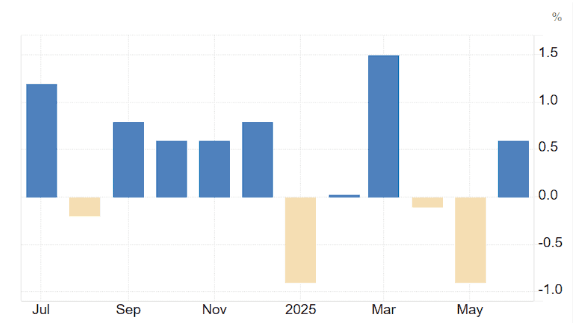



January 2026’s ISM Manufacturing Employment Index surged to 48.1, up from December 2025’s 44.9 and well above the 12-month average of 45.7. This marks the first meaningful rebound since May 2025 and interrupts a prolonged period of contraction.
The chart below illustrates the index’s trajectory over the past year, highlighting the sharp MoM acceleration in January. The index had trended downward from May’s 46.5 to a trough of 43.4 in August, before stabilizing in the mid-40s. January’s print signals a possible inflection point.