Key Takeaways: US ADP Employment Change surged to 63K in February 2026, sharply above January’s 22K and consensus estimates. The print marks the largest monthly gain since July 2025, signaling renewed private sector hiring momentum.
US ADP Employment Change Surges to 63K in February, Marking Strongest Gain Since July 2025
Big-Picture Snapshot
- February 2026 ADP Employment Change: 63K
- January 2026: 22K
- December 2025: -32K
- 12-month average (Mar 2025–Feb 2026): 36.1K
- Consensus estimate for February: 19K
- Largest monthly gain since July 2025 (104K)
Drivers this month
- Leisure & hospitality: +18K
- Trade, transportation & utilities: +14K
- Professional & business services: +11K
Policy pulse
Private sector job creation rebounded well above the Federal Reserve’s perceived “neutral” pace. The 63K print far exceeds the prior month and consensus, adding pressure to the labor market narrative.Market lens
Equities and Treasury yields both jumped on the upside surprise. Investors interpreted the robust hiring as a sign of economic resilience, while bond markets recalibrated expectations for monetary policy normalization.Foundational Indicators
- February’s 63K gain is the highest since July 2025’s 104K
- January’s 22K marked a modest rebound from December’s -32K contraction
- Six-month trend: 41K (Jan), 22K (Feb), -32K (Dec), 42K (Nov), -32K (Oct), 54K (Sep)
- YoY comparison: February 2025 was 62K
- Two-year low: October 2025 at -32K
Drivers this month
- Small business hiring: +21K
- Mid-sized firms: +29K
- Large enterprises: +13K
Policy pulse
The February print sits well above the 12-month average and signals a tight labor market. The Federal Reserve’s dual mandate remains in focus as job growth outpaces recent trends.Market lens
Dollar strength accelerated post-release. Currency traders responded to the robust data by bidding up the greenback, reflecting expectations of sustained economic momentum.Chart Dynamics
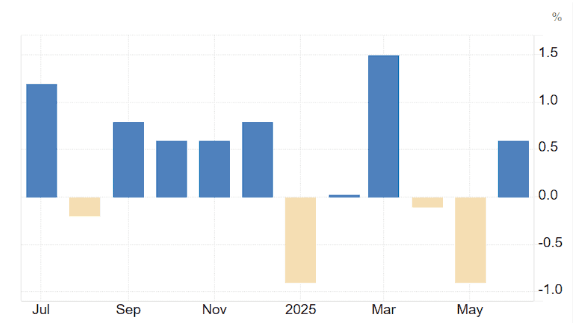
February’s ADP Employment Change surged to 63K, up sharply from January’s 22K and well above the 12-month average of 36.1K. The last time the indicator posted a larger gain was July 2025, when it hit 104K. Over the past six months, readings have swung from contraction in October and December (-32K each) to robust expansion in February.
The volatility in recent prints underscores shifting labor market dynamics. Since September 2025, monthly changes have ranged from -32K to 104K, with February’s result representing a decisive upward break from the subdued pace seen late last year.

What This Chart Tells Us: The February spike signals renewed momentum in private sector hiring, breaking a string of lackluster or negative prints. If sustained, this could reinforce confidence in the US labor market’s underlying strength, though recent volatility warrants caution.
Drivers this month
- Strong service sector hiring
- Manufacturing employment flat
- Construction: +7K
Policy pulse
The outsized February gain stands out against the prior six-month trend, raising questions about the durability of this acceleration as policymakers weigh next steps.Market lens
Futures markets repriced rate cut odds lower after the data. The labor market’s resilience prompted traders to reassess the timeline for potential monetary easing.Forward Outlook
- Bullish scenario (30–40%): Hiring momentum persists, with monthly gains above 50K through Q2 2026
- Base case (45–55%): Employment growth moderates to the 30–40K range as seasonal effects fade
- Bearish scenario (15–25%): Volatility returns, with potential for negative prints if macro headwinds intensify
Drivers this month
- Wage growth steady
- Labor force participation unchanged
- Regional gains concentrated in the South and West
Policy pulse
The February surge complicates the policy outlook. While the Fed remains data-dependent, sustained strength could delay any shift toward easing.Market lens
Bond yields climbed as traders digested the upside surprise. The market’s focus now shifts to upcoming official payrolls data for confirmation of the trend.Closing Thoughts
February’s ADP Employment Change marks a decisive break from the sluggish hiring seen late last year. The 63K print, highest since July 2025, underscores the resilience of US private sector job creation. While volatility remains a risk, the latest data injects fresh optimism into the labor market narrative.Drivers this month
- Broad-based sector gains
- Minimal layoffs reported
- Hiring concentrated among mid-sized firms
Policy pulse
The robust reading keeps policymakers alert to upside risks for inflation and growth, reinforcing the importance of a data-driven approach.Market lens
Risk assets rallied on the headline beat. The positive surprise buoyed sentiment across equities, credit, and the dollar, with investors recalibrating expectations for the months ahead.Key Markets Reacting to ADP Employment Change
The ADP Employment Change release often triggers swift moves across asset classes. US equities, the dollar, and select cryptocurrencies are especially sensitive to labor market surprises. Below are key symbols that historically show notable correlation with this indicator.
Since 2020, AAPL has tended to outperform in months with strong ADP gains, while negative prints often coincide with equity pullbacks.
- AAPL: Apple shares typically respond to labor data via consumer spending sentiment and macro risk appetite.
- EURUSD: The euro-dollar pair often sees increased volatility on US jobs surprises, reflecting shifts in rate expectations.
- BTCUSD: Bitcoin’s price action can mirror risk-on or risk-off sentiment following major US economic releases.
| Month | ADP Change (K) | AAPL % Chg |
|---|---|---|
| Jul 2025 | 104 | +4.1% |
| Oct 2025 | -32 | -2.7% |
| Dec 2025 | -32 | -1.8% |
| Feb 2026 | 63 | +2.5% |
Frequently Asked Questions
- What is the US ADP Employment Change and why does it matter?
- The US ADP Employment Change measures monthly private sector job creation, offering an early read on labor market trends ahead of official payrolls data.
- How did February 2026’s ADP Employment Change compare to recent months?
- February’s 63K gain sharply exceeded January’s 22K and the 12-month average, marking the strongest print since July 2025.
- What is the focus keyword for this report?
- ADP Employment Change
February’s 63K ADP Employment Change signals a robust rebound in US private sector hiring, with broad market implications.
Updated 3/4/26
This has been drafted with AI assistance and then thoroughly reviewed, refined, and approved by our human editorial team to ensure accuracy, and originality.
Updated 3/4/26
This has been drafted with AI assistance and then thoroughly reviewed, refined, and approved by our human editorial team to ensure accuracy, and originality.
Sources:
- ADP Employment Change, US, February 2026. Sigmanomics Economic Database.
- ADP National Employment Report Methodology. ADP Research Institute.