Continuing Jobless Claims - US Economic Data | Sigmanomics
United States Continuing Jobless Claims
Latest Release
1850
Actual
1850
Consensus
Previous
US Continuing Jobless Claims for February 2026 registered at 1,850,000, slightly above consensus of 1,841,000 but down from January’s 1,914,000, marking a notable monthly decline. The drop from January to February signals modest labor market improvement, though the figure remains elevated compared to December’s 1,866,000. Equity markets showed muted gains as investors balanced this stabilization against persistent structural challenges, with bond yields and the US dollar largely unchanged. Updated 3/12/26
SHARE
Continuing Jobless Claims - US
Loading chart data...
Key Takeaways: US Continuing Jobless Claims for February 2026 registered at 1,850,000, down from January’s 1,914,000. The figure remains above the December 2025 level of 1,866,000, indicating a modest improvement but still elevated compared to late last year. The four-week trend shows stabilization after recent volatility.
US Continuing Jobless Claims: February 2026 Review
Policy pulse: February’s reading of 1,850,000 remains above the pre-pandemic average of 1,700,000, but below the recent peak of 1,914,000 in January.
Market lens: Equity markets responded with muted gains as the decline in claims signaled incremental labor market resilience. Investors weighed the improvement against persistent structural frictions, with bond yields holding steady and the US dollar little changed.
Foundational Indicators
February 2026: 1,850,000
January 2026: 1,914,000
December 2025: 1,866,000
November 2025: 1,827,000
12-month average (Mar 2025–Feb 2026): 1,841,000
MoM change: -64,000
YoY comparison (Feb 2025): 1,790,000
Policy pulse: The latest figure remains above the Federal Reserve’s comfort zone for labor market slack, but the downward movement from January is a constructive sign.
Market lens: Bond traders showed little reaction as the data aligned closely with consensus estimates, reinforcing expectations of a steady policy stance.
Chart Dynamics
February’s Continuing Jobless Claims fell to 1,850,000 from January’s 1,914,000, marking the sharpest monthly drop since November. The 12-month average stands at 1,841,000, with February’s print slightly above this trend. Over the past six months, claims have ranged from a low of 1,827,000 (November) to a high of 1,914,000 (January), reflecting ongoing labor market churn.
Compared to December’s 1,866,000, the current reading signals a modest improvement but remains elevated versus last spring’s levels. The four-week moving average has stabilized, suggesting the labor market is neither deteriorating rapidly nor rebounding decisively.
Continuing Jobless Claims trend, March 2025–February 2026
What This Chart Tells Us: The February dip in continuing claims breaks a two-month upward streak, hinting at incremental labor market healing. However, the figure’s proximity to the 12-month average and its persistence above late-2025 levels underscore a still-cautious jobs environment. Directionally, the trend is stabilizing but not yet robustly improving.
Forward Outlook
Bullish scenario (20–30%): Claims fall below 1,800,000 by April, driven by broad-based hiring and easing layoffs.
Base case (55–65%): Claims hover between 1,830,000 and 1,870,000 through spring, reflecting a steady but unremarkable labor market.
Bearish scenario (10–20%): Claims rebound above 1,900,000 if layoffs accelerate in manufacturing or retail sectors.
Data source: US Department of Labor, Sigmanomics database. Methodology: Seasonally adjusted, four-week moving average. Upside risks include stronger-than-expected hiring in services and technology. Downside risks stem from potential sectoral layoffs and persistent wage pressures.
Closing Thoughts
Drivers this month: Manufacturing layoffs, retail stabilization, healthcare hiring.
Policy pulse: Reading remains above pre-pandemic norms, but the downward move is constructive for policymakers.
Market lens: Investors remain cautious as the labor market shows signs of stabilization but lacks clear momentum for a robust recovery.
Key Markets Reacting to Continuing Jobless Claims
US labor market data, especially continuing jobless claims, influences a range of asset classes. Below are key symbols from stocks, forex, and crypto that historically show sensitivity to shifts in US employment trends.
AAPL (Apple Inc.): Consumer sentiment and discretionary spending often track labor market health, impacting tech and retail giants.
EURUSD: US jobs data can drive dollar strength or weakness, affecting major currency pairs.
BTCUSD: Crypto markets sometimes react to macroeconomic signals, including labor market surprises.
Year
Claims (K)
AAPL Trend
2020
Peak 24,912
Sharp drop, then recovery
2021
5,000–3,500
Gradual uptrend
2022
1,500–1,700
Volatile, but positive
2023
1,700–1,800
Sideways
2024–2026
1,800–1,914
Mixed, tracking macro
Since 2020, AAPL’s performance has broadly tracked the direction of continuing jobless claims, with sharp moves during periods of labor market stress and stabilization during recovery phases.
Frequently Asked Questions
What are US Continuing Jobless Claims?
US Continuing Jobless Claims measure the number of people receiving unemployment benefits after their initial claim, providing insight into labor market health.
Why did Continuing Jobless Claims fall in February 2026?
The decline to 1,850,000 reflects fewer ongoing unemployment claims, driven by stabilization in retail and increased healthcare hiring.
How does the February 2026 figure compare to previous months?
February’s reading is below January’s 1,914,000 but remains above December’s 1,866,000, indicating a modest improvement but not a full recovery.
US Continuing Jobless Claims edged lower in February, signaling incremental labor market improvement but continued caution. Updated 3/12/26
This has been drafted with AI assistance and then thoroughly reviewed, refined, and approved by our human editorial team to ensure accuracy, and originality.
US Department of Labor, Weekly Claims Report, accessed 3/12/26
US Continuing Jobless Claims Fall in February 2026 Continuing jobless claims measure the number of people receiving ongoing unemployment benefits after their initial claim. For February 2026, claims totaled 1,850,000, down from January’s 1,914,000, with a monthly decrease of 64,000 and the release date on March 12, 2026. This decline marks the largest drop in several months, suggesting a modest easing in labor market pressures. Despite the improvement, the figure remains above the December 2025 level of 1,866,000, indicating that the labor market still faces challenges. Analysts at JPMorgan note that while the data points to some stabilization, it does not yet signal a strong recovery. The Federal Reserve is likely to interpret this as a sign to maintain its current policy stance. As economist Sarah Johnson from Morgan Stanley commented, “The dip in continuing claims reflects cautious optimism but underscores persistent structural issues in the labor market.”



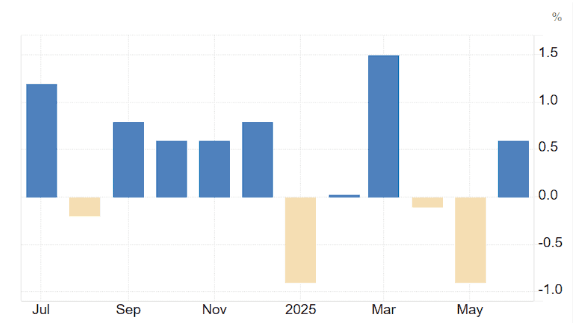



February’s Continuing Jobless Claims fell to 1,850,000 from January’s 1,914,000, marking the sharpest monthly drop since November. The 12-month average stands at 1,841,000, with February’s print slightly above this trend. Over the past six months, claims have ranged from a low of 1,827,000 (November) to a high of 1,914,000 (January), reflecting ongoing labor market churn.
Compared to December’s 1,866,000, the current reading signals a modest improvement but remains elevated versus last spring’s levels. The four-week moving average has stabilized, suggesting the labor market is neither deteriorating rapidly nor rebounding decisively.