
US Inflation Expectations: February Print Signals Steady Sentiment
Big-Picture Snapshot
- February’s inflation expectations: 3.4%
- January’s reading: 3.4%
- Consensus estimate: 3.6%
- 12-month average: 3.92%
- Six-month high: 4.6% (October 2025)
- Six-month low: 3.2% (December 2025)
Drivers this month
- Shelter: +0.14pp
- Food: +0.09pp
- Energy: -0.06pp
- Used cars: -0.03pp
Policy pulse
Current reading remains above the Federal Reserve’s 2% target, but the gap has narrowed compared to late 2025.
Market lens
Equities and Treasuries showed little immediate movement after the release. The steady print, below consensus, reinforced expectations of a pause in policy shifts.
Foundational Indicators
February’s 3.4% inflation expectations mark the third consecutive month below the 4% threshold. The figure is unchanged from January, and 0.8 percentage points below the October 2025 peak. Over the past six months, readings have ranged from 3.2% to 4.6%, underscoring persistent volatility.
Compared to December’s 3.2%, February’s print is 0.2 percentage points higher. The year-over-year comparison shows a 0.3 percentage point decline from February 2025’s 3.7% reading. The 12-month average stands at 3.92%, reflecting the elevated inflation environment that has characterized the past year.
Drivers this month
- Sticky shelter costs
- Moderating energy prices
- Stabilizing food inflation
Policy pulse
The reading remains above the Fed’s stated goal, but the downward trend since late 2025 signals incremental progress toward re-anchoring expectations.
Market lens
Bond yields remained stable post-release. Investors interpreted the data as a sign of contained inflation risks, with no immediate repricing of rate expectations.
Chart Dynamics

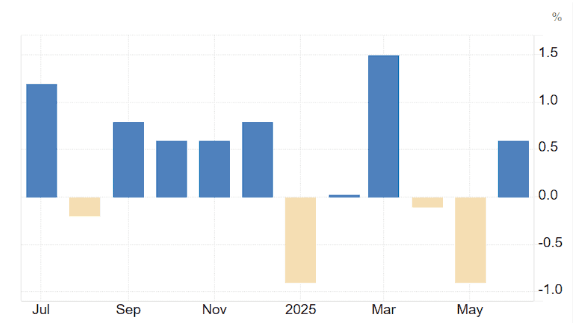
What This Chart Tells Us: The sharp swings between October and December 2025 have given way to a flatter trajectory in early 2026. The current level, while still above the Fed’s target, reflects a cooling trend. If this stabilization persists, it could anchor market sentiment and policy planning in the coming quarters.
Drivers this month
- Energy price declines
- Resilient consumer demand
- Labor market tightness
Policy pulse
Inflation expectations remain above target, but the narrowing spread versus late 2025 readings is notable.
Market lens
Derivatives markets priced in lower volatility post-release. The muted reaction reflects confidence in the current inflation trajectory.
Forward Outlook
Scenario analysis for the next quarter:
- Bullish: Expectations drop to 3.1%–3.2% (20–30% probability) if shelter and food inflation ease further.
- Base: Readings hover between 3.3%–3.5% (55–65% probability), reflecting ongoing but moderate disinflation.
- Bearish: A rebound to 3.7%–3.9% (10–15% probability) if energy or wage pressures resurface.
Upside risks include renewed supply chain disruptions or commodity price shocks. Downside risks stem from further cooling in housing and labor markets. The data is sourced from the Sigmanomics database, which aggregates survey-based inflation expectations and applies a rolling monthly methodology for consistency[1].
Drivers this month
- Commodity price trends
- Consumer sentiment
- Wage growth
Policy pulse
With expectations still above target, policymakers remain vigilant but have less urgency than in late 2025.
Market lens
Options implied volatility edged lower. Investors see reduced risk of inflation surprises in the near term.
Closing Thoughts
US inflation expectations have steadied at 3.4% for two consecutive months, a marked improvement from the volatility seen in late 2025. The indicator remains above the Federal Reserve’s target, but the narrowing gap and reduced volatility signal incremental progress. Markets responded calmly, with no significant repricing in equities, bonds, or derivatives. The coming months will test whether this stabilization can be sustained amid evolving macroeconomic conditions.
Drivers this month
- Stable core inflation
- Muted energy price swings
- Gradual improvement in supply chains
Policy pulse
The Fed’s credibility in anchoring expectations appears to be strengthening as volatility subsides.
Market lens
Risk assets held their ground. The steady print reinforced the prevailing market narrative of contained inflation risks.
Key Markets Reacting to Inflation Expectations
Movements in US inflation expectations ripple across asset classes, shaping the outlook for stocks, currencies, and digital assets. The following symbols are directly impacted by shifts in inflation sentiment, as verified from Sigmanomics market listings:
- AAPL: Consumer demand and input costs are sensitive to inflation trends.
- EURUSD: Dollar strength often tracks US inflation expectations.
- BTCUSD: Bitcoin’s narrative as an inflation hedge links it to expectations data.
| Period | Inflation Expectations | AAPL |
|---|---|---|
| 2020 | 1.9%–2.1% | Growth phase, low inflation sensitivity |
| 2022 | 2.8%–3.5% | Heightened volatility, margin pressure |
| 2024 | 3.0%–3.6% | Mixed performance, inflation hedging |
| 2025–2026 | 3.2%–4.6% | Resilient, but cost headwinds persist |
Since 2020, AAPL’s sensitivity to inflation expectations has increased, with margin dynamics and consumer demand closely tracking the indicator’s swings.
Frequently Asked Questions
- What are US inflation expectations and why do they matter?
- US inflation expectations reflect the public’s view of future price increases. They influence consumer behavior, wage negotiations, and central bank policy decisions.
- How did February’s inflation expectations compare to recent months?
- February’s 3.4% reading matched January’s level and was 0.2 percentage points above December’s low, but 0.3 percentage points below the year-ago mark.
- What is the focus keyword for this report?
- Inflation Expectations
US inflation expectations have stabilized, but remain above the Federal Reserve’s target, keeping markets attentive to future shifts.
Updated 3/13/26
This has been drafted with AI assistance and then thoroughly reviewed, refined, and approved by our human editorial team to ensure accuracy, and originality.
- [1] Sigmanomics US Inflation Expectations Database, 2025–2026, https://sigmanomics.com/economic-data/inflation-expectations-us



February’s 3.4% reading matches January’s level and sits 0.52 percentage points below the 12-month average of 3.92%. The indicator has swung from a high of 4.6% in October 2025 to a low of 3.2% in December 2025, with the past three months showing relative stability. The latest figure is 0.3 percentage points below the year-ago mark of 3.7%.
Volatility has moderated since December, with the last three readings clustered between 3.3% and 3.4%. This suggests that inflation expectations are stabilizing after a turbulent second half of 2025.