US ISM Services PMI surged to 56.10 in February, sharply above January’s 53.80 and consensus of 53.00, marking the highest reading since January 2022 and signaling robust expansion. The index rose 2.30 points from January to February, well above the 50.00 expansion threshold, driving immediate gains in equities and the US dollar. Market pricing now reflects increased resilience in services, pressuring the Federal Reserve to maintain a vigilant policy stance. Updated 3/4/26
SHARE
ISM Services PMI - US
Loading chart data...
Key Takeaways: US ISM Services PMI surged to 56.1 in February, sharply above January’s 53.8 and consensus estimates. This marks the highest reading since January 2022, signaling robust expansion in the services sector. Market reaction was immediate, with equities and the dollar both strengthening.
US ISM Services PMI Surges to 56.1 in February, Defying Expectations
The Institute for Supply Management’s Services PMI for the United States jumped to 56.1 in February 2026, released March 4. This reading far exceeded the consensus estimate of 53.0 and January’s 53.8, signaling a strong rebound in service sector activity. The index, which tracks business activity, new orders, and employment across non-manufacturing industries, is a key barometer for US economic momentum.
The 56.1 reading stands well above the 50.0 expansion threshold and signals a pace of growth outstripping the Federal Reserve’s baseline for stable expansion. The Fed’s focus remains on inflation and labor market tightness, but this robust print adds pressure to maintain a vigilant policy stance.
Market lens
Equities rallied and the US dollar strengthened immediately after the release. Investors interpreted the upside surprise as a sign of economic resilience, with the S&P 500 and major service sector stocks posting intraday gains. Treasury yields ticked higher as traders recalibrated expectations for the pace of monetary easing.
Foundational Indicators
Drivers this month
Supplier Deliveries: -0.4 points MoM
Inventories: +0.9 points MoM
Prices Paid: +1.2 points MoM
Policy pulse
With the ISM Services PMI at 56.1, the index is now 2.3 points above its 12-month average of 53.8. This divergence from trend suggests underlying demand remains robust, complicating the Fed’s path toward policy normalization.
Market lens
Bond markets responded with a modest selloff. The higher-than-expected PMI reading fueled concerns that persistent services strength could delay rate cuts, pushing short-term yields higher and flattening the curve.
Chart Dynamics
February’s ISM Services PMI hit 56.1, up from January’s 53.8 and well above the 12-month average of 53.8. This marks the strongest monthly reading since January 2022. Over the past six months, the index has climbed from a low of 50.0 in October 2025, with steady gains in November (52.4), December (52.6), and a sharp acceleration since the start of 2026.
Compared to August 2025’s 50.1 and June’s contractionary 49.9, the current print underscores a decisive shift back to expansion. The last time the index was above 56.0 was over two years ago, highlighting the significance of this rebound.
ISM Services PMI trend, March 2025 – February 2026
What This Chart Tells Us: The ISM Services PMI’s upward trajectory since October 2025 signals broad-based momentum in the US services sector. The acceleration in February 2026, with the index reaching its highest level in over two years, points to renewed business confidence and robust demand. This directional move reduces recession risk in the near term but may complicate the inflation outlook.
Data sourced from the Institute for Supply Management’s monthly survey of purchasing managers in non-manufacturing industries. The headline index aggregates business activity, new orders, employment, and supplier deliveries, with a reading above 50.0 indicating expansion.
Risks and balances
Upside risks include continued consumer spending and easing supply constraints. Downside risks stem from persistent inflation and potential policy tightening. The balance of evidence currently favors ongoing expansion, but volatility remains elevated.
Closing Thoughts
Market lens
Traders recalibrated expectations for the Fed’s next moves. The robust PMI print has shifted the narrative toward a more resilient services economy, with investors watching for signs of spillover into inflation and wage growth. The next few months will be critical in determining whether this momentum can be sustained.
Key Markets Reacting to ISM Services PMI
The ISM Services PMI is a closely watched gauge for US equity, currency, and crypto markets. A strong reading often boosts risk appetite, while a miss can trigger risk-off moves. Below are key tradable symbols directly impacted by the latest PMI release, each verified from Sigmanomics’ official listings.
AAPL — Apple shares often track broad US economic sentiment, with services sector strength supporting tech valuations.
EURUSD — The euro-dollar pair reacts sharply to US macro surprises, with a strong PMI typically lifting the dollar.
BTCUSD — Bitcoin’s price action can reflect shifts in risk sentiment following major US economic data.
Year
ISM Services PMI
AAPL (YoY %)
2020
Avg 54.5
+80.7%
2021
Avg 61.9
+34.0%
2022
Avg 56.7
-26.8%
2023
Avg 53.9
+48.2%
2024
Avg 52.8
+49.0%
Since 2020, AAPL’s annual performance has shown a positive correlation with periods of above-trend ISM Services PMI, though sector rotation and macro shocks can moderate this relationship.
FAQ
What is the significance of the US ISM Services PMI’s February reading?
The February 2026 ISM Services PMI surged to 56.1, the highest since January 2022, signaling robust expansion in the US services sector and exceeding both consensus and prior month figures.
How does the ISM Services PMI impact financial markets?
Markets responded swiftly to the upside surprise, with equities and the US dollar strengthening. The PMI is a key indicator for gauging economic momentum and policy direction.
What does a PMI above 50 mean for the US economy?
A PMI reading above 50.0 indicates expansion in the services sector, suggesting increased business activity, hiring, and demand across non-manufacturing industries.
US services sector momentum accelerated in February, with the ISM Services PMI hitting a two-year high and fueling optimism for continued expansion.
Updated 3/4/26
This has been drafted with AI assistance and then thoroughly reviewed, refined, and approved by our human editorial team to ensure accuracy, and originality.
Institute for Supply Management, ISM Services PMI, official release March 4, 2026.
Sigmanomics macroeconomic database, US ISM Services PMI historical series, accessed March 4, 2026.
Economic Calendar - US Events
Wednesday, January 21, 2026
Actual
Previous
Consensus
Sigmanomics Rolling-Surprise Forecast
Impact
17:00
US
Atlanta Fed GDPNow
-
5.3
5.3
5.73
Medium
15:00
US
Pending Home Sales MoM
-
3.3
1.4
2.55
Medium
15:00
US
Pending Home Sales YoY
-
2.6
0.2
1.80
Medium
15:00
US
Construction Spending MoM
-
0.2
-0.1
-0.10
Low
Friday, January 16, 2026
Actual
Previous
Consensus
Sigmanomics Rolling-Surprise Forecast
Impact
15:00
US
Michigan Inflation Expectations
-
4.2
4.2
4.23
Low
15:00
US
Michigan Consumer Sentiment
-
52.9
54
54.00
High
15:00
US
Michigan Current Conditions
-
50.4
52.4
52.80
Low
15:00
US
Michigan 5 Year Inflation Expectations
-
3.2
3.4
3.47
Low
15:00
US
NAHB Housing Market Index
37
39
40
38.50
Medium
15:00
US
Michigan Consumer Expectations
-
54.6
55
55.10
Low
14:15
US
Industrial Production YoY
2
2.5
2.7
2.80
Low
14:15
US
Manufacturing Production MoM
0.2
0.3
-0.2
-0.15
Low
14:15
US
Capacity Utilization
76.3
76
76
76.08
Low
14:15
US
Manufacturing Production YoY
2
1.9
2
2.25
Low
14:15
US
Industrial Production MoM
0.4
0.2
0.1
0.13
Medium
Thursday, January 15, 2026
Actual
Previous
Consensus
Sigmanomics Rolling-Surprise Forecast
Impact
15:30
US
EIA Natural Gas Stocks Change
-71
-119
-90
-85.17
Low
13:30
US
Initial Jobless Claims
198
207
215
208.33
High
13:30
US
Import Prices MoM
0.4
0
-0.1
0.15
Medium
13:30
US
Import Prices YoY
0.1
0.3
0.4
0.25
Low
13:30
US
Import Prices YoY
-
0.3
0.5
0.35
Low
13:30
US
Import Prices MoM
-
0
0.1
0.35
Medium
13:30
US
Export Prices YoY
-
3.8
3
3.00
Low
13:30
US
Export Prices YoY
-
3.8
3
3.00
Low
13:30
US
Continuing Jobless Claims
1884
1903
1890
1883.17
High
13:30
US
NY Empire State Manufacturing Index
7.7
-3.7
1
4.35
High
13:30
US
Export Prices MoM
-
0
-0.1
-0.10
Medium
13:30
US
Philadelphia Fed Manufacturing Index
12.6
-8.8
-2
-1.65
Medium
13:30
US
Jobless Claims 4-Week Average
205
211.5
215
212.58
High
Wednesday, January 14, 2026
Actual
Previous
Consensus
Sigmanomics Rolling-Surprise Forecast
Impact
17:30
US
Atlanta Fed GDPNow
5.3
5.1
5.1
5.53
Medium
17:00
US
Atlanta Fed GDPNow
-
5.1
5.1
5.53
Medium
15:30
US
EIA Distillate Stocks Change
-0.029
5.594
-0.2
0.86
Low
15:30
US
EIA Crude Oil Stocks Change
3.391
-3.831
-2.2
-2.26
Medium
15:30
US
EIA Gasoline Stocks Change
8.977
7.702
4
6.29
Medium
15:10
US
RCM/TIPP Economic Optimism Index
-
47.9
47.4
46.90
Low
15:00
US
Existing Home Sales
4.35
4.14
4.21
4.23
High
15:00
US
Existing Home Sales MoM
5.1
0.7
-1.6
1.40
High
15:00
US
Business Inventories MoM
0.3
0.3
0.2
0.23
Medium
15:00
US
Retail Inventories Ex Autos MoM
0.3
0.1
-0.1
-0.05
Low
13:30
US
PPI Ex Food, Energy and Trade YoY
3.4
3
2.9
3.15
Low
13:30
US
Core PPI YoY
3
2.9
2.7
2.85
Low
13:30
US
Producer Price Index MoM
-
0.3
0.4
0.40
High
13:30
US
PPI Ex Food, Energy and Trade MoM
-
0.1
0.2
0.20
Low
13:30
US
Core PPI MoM
0.3
0.4
0.2
0.25
Medium
13:30
US
Core PPI YoY
-
2.6
2.7
2.85
Low
13:30
US
Producer Price Index YoY
-
2.7
2.7
2.70
Low
13:30
US
Current Account
-226.4
-249.2
-238.4
-232.40
Medium
13:30
US
Retail Sales Ex Autos MoM
0.5
0.2
0.4
0.45
High
13:30
US
Retail Sales YoY
3.3
3.3
3
3.27
High
13:30
US
Retail Sales MoM
0.6
-0.1
0.4
0.63
High
13:30
US
Retail Sales Ex Gas/Autos MoM
0.4
0.4
0.1
0.25
High
Tuesday, January 13, 2026
Actual
Previous
Consensus
Sigmanomics Rolling-Surprise Forecast
Impact
21:30
US
API Crude Oil Stock Change
5.27
-2.8
-2
-2.64
Medium
19:00
US
Monthly Budget Statement
-145
-173
-150
-147.50
Medium
19:00
US
Budget Balance
-145
-173
-144.5
-144.75
Medium
15:10
US
RCM/TIPP Economic Optimism Index
47.2
47.9
48.2
47.70
Low
15:10
US
IBD/TIPP Economic Optimism
47.2
47.9
48.2
47.70
Low
15:00
US
New Home Sales
-
800
710
710.00
High
15:00
US
New Home Sales
-
0.8
0.69
0.69
Medium
15:00
US
RCM/TIPP Economic Optimism Index
47.2
47.9
48.2
47.70
Low
13:30
US
Core Inflation Rate YoY
2.6
2.6
2.7
2.58
High
13:30
US
CPI
324.05
324.12
323.8
323.61
High
13:30
US
CPI s.a
326.03
325.031
325.7
325.87
High
13:30
US
Inflation Rate YoY
2.7
2.7
2.7
2.60
High
13:30
US
Building Permits
1.411
1.415
1.412
2.81
Low
11:00
US
NFIB Business Optimism Index
99.5
99
99.5
99.50
Low
Monday, January 12, 2026
Actual
Previous
Consensus
Sigmanomics Rolling-Surprise Forecast
Impact
17:00
US
Quarterly Grain Stocks - Corn
13.28
1.55
13.1
13.19
Low
17:00
US
Quarterly Grain Stocks - Wheat
1.68
2.13
1.65
1.67
Low
17:00
US
Quarterly Grain Stocks - Soy
3.29
0.32
3.28
3.29
Low
Friday, January 9, 2026
Actual
Previous
Consensus
Sigmanomics Rolling-Surprise Forecast
Impact
16:30
US
Atlanta Fed GDPNow
5.1
5.4
5.4
5.83
Medium
15:30
US
Atlanta Fed GDPNow
-
5.4
5.4
5.83
Medium
15:00
US
Michigan Consumer Sentiment
54
52.9
53.5
53.50
High
15:00
US
Michigan Current Conditions
52.4
50.4
50.5
50.90
Low
15:00
US
Michigan 5 Year Inflation Expectations
3.4
3.2
3.1
3.17
Low
15:00
US
Michigan Inflation Expectations
4.2
4.2
4.2
4.23
Low
15:00
US
Michigan Consumer Expectations
55
54.6
54.2
54.30
Low
15:00
US
Inflation Expectations
3.4
3.2
3.3
3.32
Medium
13:30
US
Average Hourly Earnings YoY
3.8
3.6
3.6
3.63
Medium
13:30
US
U-6 Unemployment Rate
8.4
8.7
8.8
8.60
High
13:30
US
Housing Starts
1.246
1.306
1.33
1.29
High
13:30
US
Housing Starts MoM
-4.6
1.2
0.8
-1.90
Medium
13:30
US
Building Permits
6.4
-2.3
0.8
2.20
Medium
13:30
US
Government Payrolls
13
6
-10
-4.75
Low
13:30
US
Unemployment Rate
4.4
4.5
4.5
4.53
High
13:30
US
Manufacturing Payrolls
-8
-2
-5
-5.75
Low
13:30
US
Nonfarm Payrolls Private
37
50
64
63.25
High
13:30
US
Participation Rate
62.4
62.5
62.6
62.50
Medium
13:30
US
Non Farm Payrolls
50
56
60
61.00
High
13:30
US
Average Hourly Earnings MoM
0.3
0.2
0.3
0.25
Medium
13:30
US
Average Weekly Hours
34.2
34.3
34.3
34.27
Low
Thursday, January 8, 2026
Actual
Previous
Consensus
Sigmanomics Rolling-Surprise Forecast
Impact
20:00
US
Consumer Credit Change
4.23
9.24
10
7.12
Low
20:00
US
BoE Consumer Credit
4.23
9.24
10.1
7.17
Medium
17:00
US
Atlanta Fed GDPNow
5.4
2.7
2.7
3.13
Medium
16:00
US
Consumer Inflation Expectation
3.4
3.2
3.2
3.30
Low
15:30
US
EIA Natural Gas Stocks Change
-119
-38
-114
-109.17
Low
15:00
US
Wholesale Inventories MoM
0.2
0.5
0.2
0.20
Low
13:30
US
Nonfarm Productivity QoQ
4.9
4.1
3
3.95
Medium
13:30
US
Initial Jobless Claims
208
200
210
203.33
High
13:30
US
Continuing Jobless Claims
1914
1858
1900
1893.17
High
13:30
US
Jobless Claims 4-Week Average
211.75
219
210.75
208.33
High
13:30
US
Unit Labour Costs QoQ
-1.9
-2.9
1
-0.45
Medium
13:30
US
Balance of Trade
-29.4
-48.1
-58.9
-44.15
Medium
12:30
US
Challenger Job Cuts
35.553
71.321
89
62.28
Low
10:30
US
Challenger Job Cuts
35.553
71.321
89
62.28
Low
Wednesday, January 7, 2026
Actual
Previous
Consensus
Sigmanomics Rolling-Surprise Forecast
Impact
15:30
US
EIA Gasoline Stocks Change
7.702
5.845
2.9
5.19
Medium
15:30
US
EIA Crude Oil Stocks Change
-3.831
-1.934
1.1
1.04
Medium
15:30
US
EIA Distillate Stocks Change
5.594
4.977
2.2
3.26
Low
15:00
US
JOLTs Job Openings
7.146
7.449
7.6
7.37
High
15:00
US
Factory Orders ex Transportation
-0.2
0.1
-0.3
-0.25
Low
15:00
US
JOLTs Job Quits
3.161
2.973
2.99
3.08
Low
15:00
US
ISM Non-Manufacturing PMI
54.4
52.6
52.2
53.30
High
15:00
US
ISM Non-Manufacturing New Orders
57.9
52.9
52.6
55.25
Low
15:00
US
Factory Orders MoM
-1.3
0.2
-1.2
-1.25
Medium
15:00
US
ISM Non-Manufacturing Employment
52
48.9
49
50.50
Medium
15:00
US
ISM Non-Manufacturing Prices
64.3
65.4
64.9
64.60
High
15:00
US
ISM Services PMI
54.4
52.6
52.3
53.35
High
15:00
US
ISM Services Business Activity
56
54.5
54
55.00
Low
15:00
US
ISM Services New Orders
57.9
52.9
52.2
55.05
Low
15:00
US
ISM Services Employment
52
48.9
48.7
50.35
Low
15:00
US
ISM Services Prices
64.3
65.4
65.5
64.90
Low
15:00
US
Durable Goods Orders Ex Defense MoM
-1.5
-1.5
-1.5
-1.50
Low
13:15
US
ADP Employment Change
41
-29
47
44.00
High
Tuesday, January 6, 2026
Actual
Previous
Consensus
Sigmanomics Rolling-Surprise Forecast
Impact
21:30
US
API Crude Oil Stock Change
-2.8
1.7
1.2
0.56
Medium
14:45
US
S&P Global Composite PMI
52.7
54.2
53
52.70
Low
14:45
US
S&P Global Services PMI
52.5
54.1
52.9
52.52
Low
Monday, January 5, 2026
Actual
Previous
Consensus
Sigmanomics Rolling-Surprise Forecast
Impact
19:00
US
Total Vehicle Sales
16
15.6
15.7
15.85
Low
17:00
US
Atlanta Fed GDPNow
2.7
3
3
3.43
Medium
15:00
US
ISM Services Business Activity
-
54.5
54
55.00
Low
15:00
US
ISM Services Prices
-
65.4
65.5
64.90
Low
15:00
US
ISM Services Employment
-
48.9
48.7
50.35
Low
15:00
US
ISM Services New Orders
-
52.9
52.2
55.05
Low
15:00
US
ISM Services PMI
-
52.6
52
53.05
High
15:00
US
ISM Manufacturing Employment
44.9
44
44.1
44.50
Medium
15:00
US
ISM Manufacturing New Orders
47.7
47.4
47.2
47.45
Low
15:00
US
ISM Manufacturing Prices
58.5
58.5
59
58.75
Low
15:00
US
ISM Manufacturing PMI
47.9
48.2
48.3
48.10
High
Friday, January 2, 2026
Actual
Previous
Consensus
Sigmanomics Rolling-Surprise Forecast
Impact
15:00
US
Construction Spending MoM
-
0.2
-0.1
-0.10
Low
14:45
US
S&P Global Manufacturing PMI
51.8
52.2
51.8
51.75
Low
13:30
US
Average Weekly Hours
-
34.3
34.3
34.27
Low
13:30
US
Average Hourly Earnings MoM
-
0.1
0.2
0.15
Medium
13:30
US
Unemployment Rate
-
4.6
4.7
4.72
High
13:30
US
Nonfarm Payrolls Private
-
69
6
5.25
High
13:30
US
Participation Rate
-
62.5
62.6
62.50
Medium
13:30
US
Manufacturing Payrolls
-
-5
-10
-10.75
Low
13:30
US
Government Payrolls
-
-5
-6
-0.75
Low
13:30
US
Non Farm Payrolls
-
64
12
13.00
High
Wednesday, December 31, 2025
Actual
Previous
Consensus
Sigmanomics Rolling-Surprise Forecast
Impact
17:00
US
EIA Natural Gas Stocks Change
-38
-166
-53
-48.17
Low
15:30
US
EIA Crude Oil Stocks Change
-1.934
0.405
-0.9
-0.96
Medium
15:30
US
EIA Gasoline Stocks Change
5.845
2.862
1.9
4.19
Medium
15:30
US
EIA Distillate Stocks Change
4.977
0.202
2.2
3.26
Low
14:45
US
Chicago PMI
-
36.3
39.5
41.50
Medium
13:30
US
Continuing Jobless Claims
1866
1913
1915
1908.17
High
13:30
US
Jobless Claims 4-Week Average
218.75
217
224.25
221.83
High
13:30
US
Initial Jobless Claims
199
215
220
213.33
High
Tuesday, December 30, 2025
Actual
Previous
Consensus
Sigmanomics Rolling-Surprise Forecast
Impact
15:30
US
Dallas Fed Services Revenues Index
0.1
-2.5
-4
-1.95
Low
15:30
US
Dallas Fed Services Index
-3.3
-2.3
-2
-2.65
Low
14:45
US
Chicago PMI
43.5
36.3
39.5
41.50
Medium
14:00
US
House Price Index YoY
1.7
1.8
0.9
1.30
Low
14:00
US
S&P/Case-Shiller Home Price YoY
1.3
1.4
1.1
1.20
Medium
14:00
US
House Price Index
436.7
435.2
435.8
436.25
Low
14:00
US
S&P/Case-Shiller Home Price MoM
-0.3
-0.5
-0.3
-0.30
Low
14:00
US
House Price Index MoM
0.4
-0.1
0.1
0.25
Low
Monday, December 29, 2025
Actual
Previous
Consensus
Sigmanomics Rolling-Surprise Forecast
Impact
17:00
US
EIA Natural Gas Stocks Change
-166
-167
-168
-163.17
Low
15:30
US
Dallas Fed Manufacturing Index
-10.9
-10.4
-2.5
-6.70
Medium
15:30
US
EIA Distillate Stocks Change
0.202
1.712
0.4
1.46
Low
15:30
US
EIA Gasoline Stocks Change
2.862
4.808
1.1
3.39
Medium
15:30
US
EIA Crude Oil Stocks Change
0.405
-1.274
-2.4
-2.46
Medium
15:00
US
Pending Home Sales MoM
3.3
2.4
1
2.15
Medium
15:00
US
Pending Home Sales YoY
2.6
-0.4
-0.6
1.00
Medium
15:00
US
Wholesale Inventories MoM
-
0.5
-0.4
-0.40
Low
Wednesday, December 24, 2025
Actual
Previous
Consensus
Sigmanomics Rolling-Surprise Forecast
Impact
13:30
US
Jobless Claims 4-Week Average
216.75
217.5
219
216.58
High
13:30
US
Initial Jobless Claims
214
224
223
216.33
High
13:30
US
Continuing Jobless Claims
1923
1885
1900
1893.17
High
Tuesday, December 23, 2025
Actual
Previous
Consensus
Sigmanomics Rolling-Surprise Forecast
Impact
16:30
US
Atlanta Fed GDPNow
-
3.5
3.5
3.93
Medium
16:00
US
Atlanta Fed GDPNow
3
3.5
3.5
3.93
Medium
15:00
US
Richmond Fed Manufacturing Shipments Index
-11
-14
-3
-7.00
Low
15:00
US
New Home Sales
-
0.8
0.71
0.71
High
15:00
US
Richmond Fed Services Revenues Index
-6
-4
1
-2.50
Low
15:00
US
Richmond Fed Manufacturing Index
-7
-15
-7
-7.00
Low
15:00
US
CB Consumer Confidence
89.1
92.9
91
90.05
Medium
14:15
US
Manufacturing Production YoY
1.9
2.1
0.9
1.15
Low
14:15
US
Manufacturing Production YoY
-
1.5
1
1.25
Low
14:15
US
Industrial Production YoY
2.2
1.9
1.1
1.20
Low
14:15
US
Manufacturing Production MoM
-0.4
0
-0.2
-0.15
Low
14:15
US
Industrial Production YoY
-
1.6
1.1
1.20
Low
14:15
US
Capacity Utilization
75.9
76
75.9
75.98
Low
14:15
US
Industrial Production MoM
-0.1
0.1
0.1
0.13
Medium
14:15
US
Industrial Production MoM
-
0.1
-0.1
-0.07
Medium
14:15
US
Capacity Utilization
-
75.9
77.2
77.28
Low
13:55
US
Durable Goods Orders Ex Transp MoM
-
0.6
0.3
0.25
Low
13:30
US
GDP Price Index QoQ
3.7
2.1
2.7
3.20
Medium
13:30
US
Real Consumer Spending QoQ
3.5
2.5
2.2
2.85
Low
13:30
US
Core PCE Prices QoQ
2.9
2.6
2.9
2.90
Low
13:30
US
PCE Prices QoQ
2.8
2.1
2.8
2.80
Low
13:30
US
Corporate Profits QoQ
4.4
0.2
1
2.70
Medium
13:30
US
GDP Sales QoQ
4.6
7.5
7.4
6.00
Low
13:30
US
GDP Growth Rate QoQ
4.3
3.8
3.3
3.80
High
13:30
US
Gross Domestic Product QoQ
4.3
3.8
3.3
3.80
High
13:30
US
Durable Goods Orders ex Defense MoM
-1.5
0.1
-0.8
-1.15
High
13:30
US
Durable Goods Orders Ex Transp MoM
0.2
0.7
0.3
0.25
High
13:30
US
Durable Goods Orders MoM
-2.2
0.7
-1.5
-1.85
High
13:30
US
Non Defense Goods Orders Ex Air
0.5
1.1
-0.1
0.20
Low
Friday, December 19, 2025
Actual
Previous
Consensus
Sigmanomics Rolling-Surprise Forecast
Impact
15:00
US
Michigan Consumer Expectations
54.6
51
55
55.10
Low
15:00
US
Michigan 5 Year Inflation Expectations
3.2
3.4
3.2
3.28
Low
15:00
US
Michigan Inflation Expectations
4.2
4.5
4.1
4.13
Low
15:00
US
Existing Home Sales
4.13
4.11
4.2
4.22
High
15:00
US
Existing Home Sales MoM
0.5
1.5
-4.8
-1.80
High
15:00
US
Michigan Current Conditions
50.4
51.1
50.7
51.10
Low
15:00
US
Michigan Consumer Sentiment
52.9
51
53.4
53.40
High
15:00
US
Inflation Expectations
3.2
3.4
3.2
3.23
Medium
Thursday, December 18, 2025
Actual
Previous
Consensus
Sigmanomics Rolling-Surprise Forecast
Impact
21:00
US
Net Long-Term TIC Flows
17.5
173.2
122.7
70.10
Medium
16:00
US
Kansas Fed Composite Index
1
8
6
3.50
Low
16:00
US
Kansas Fed Manufacturing Index
-3
18
11
4.00
Low
15:30
US
EIA Natural Gas Stocks Change
-167
-177
-169
-164.17
Low
13:30
US
Continuing Jobless Claims
1897
1830
1930
1923.17
High
13:30
US
Philadelphia Fed Manufacturing Index
-10.2
-1.7
3
3.35
Medium
13:30
US
Jobless Claims 4-Week Average
217.5
217
218.5
216.08
High
13:30
US
Initial Jobless Claims
224
237
225
218.33
High
13:30
US
Current Account
-
-251.3
-250
-244.00
Medium
13:30
US
CPI
324.12
324.8
325.13
324.94
High
13:30
US
Core Inflation Rate YoY
2.6
3
3
2.88
High
13:30
US
Inflation Rate YoY
2.7
3
3.1
3.00
High
Wednesday, December 17, 2025
Actual
Previous
Consensus
Sigmanomics Rolling-Surprise Forecast
Impact
17:00
US
Atlanta Fed GDPNow
-
3.5
3.5
3.93
Medium
15:30
US
EIA Gasoline Stocks Change
4.808
6.397
2.1
4.39
Medium
15:30
US
EIA Crude Oil Stocks Change
-1.274
-1.812
-1.1
-1.16
Medium
15:30
US
EIA Distillate Stocks Change
1.712
2.502
1.2
2.26
Low
Tuesday, December 16, 2025
Actual
Previous
Consensus
Sigmanomics Rolling-Surprise Forecast
Impact
21:30
US
API Crude Oil Stock Change
-9.3
-4.8
-2.2
-2.84
Medium
17:00
US
Atlanta Fed GDPNow
3.5
3.5
3.5
3.93
Medium
15:00
US
Business Inventories MoM
0.2
0
0.2
0.23
Medium
15:00
US
Retail Inventories Ex Autos MoM
0
0
0.2
0.25
Low
14:45
US
S&P Global Composite PMI
53
54.2
53.9
53.60
Medium
14:45
US
S&P Global Manufacturing PMI
51.8
52.2
52
51.95
High
14:45
US
S&P Global Services PMI
52.9
54.1
54
53.63
High
14:45
US
S&P Global Composite PMI Flash
53
54.2
53.2
53.10
Medium
14:45
US
S&P Global Services PMI Flash
52.9
54.1
53
52.95
Medium
14:45
US
S&P Global Manufacturing PMI Flash
51.8
52.2
52
51.90
Medium
13:30
US
Housing Starts
-
1.307
1.32
1.28
High
13:30
US
Import Prices MoM
-
0
0.1
0.35
Medium
13:30
US
Import Prices YoY
-
0.3
0.5
0.35
Low
13:30
US
Export Prices YoY
-
3.8
3
3.00
Low
13:30
US
Government Payrolls
-5
-157
-3
2.25
Low
13:30
US
Average Weekly Hours
34.2
34.2
34.2
34.18
Low
13:30
US
Average Hourly Earnings YoY
3.7
3.7
3.8
3.82
Medium
13:30
US
Average Hourly Earnings MoM
0.1
0.4
0.3
0.25
Medium
13:30
US
Manufacturing Payrolls
-5
-9
-5
-5.75
Low
13:30
US
Non Farm Payrolls
64
-105
50
51.00
High
13:30
US
Nonfarm Payrolls Private
69
52
45
44.25
High
13:30
US
Unemployment Rate
4.6
4.4
4.4
4.43
High
13:30
US
Retail Sales Ex Autos MoM
0.4
0.1
0.3
0.35
High
13:30
US
Retail Sales YoY
3.5
4.2
2.7
2.98
High
13:30
US
Retail Sales MoM
0.8
0.1
0.1
0.33
High
13:30
US
Retail Sales Ex Gas/Autos MoM
0.5
0
0.2
0.35
High
Symbol
Price
Analysis and Forecast
US ISM Services PMI Climbs Sharply in February Report The ISM Services PMI measures the economic health of the US non-manufacturing sector by tracking business activity, new orders, and employment. In February 2026, the index rose to 56.10, up from 53.80 in January and well above the consensus estimate of 53.00. This 2.30-point increase signals a strong acceleration in service sector growth, reflecting robust demand and expanding business conditions. Released on March 4, the data marks the highest reading since January 2022, suggesting renewed momentum in the economy’s largest segment. Market reactions were swift, with equities and the US dollar strengthening amid optimism about sustained expansion. Analysts at JPMorgan noted, “This surge in the ISM Services PMI underscores resilient consumer spending and a labor market that continues to support growth despite tightening monetary policy.” The report highlights ongoing strength in services, which may influence Federal Reserve decisions in the coming months.



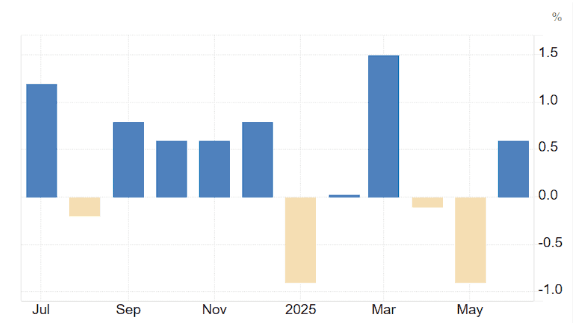



February’s ISM Services PMI hit 56.1, up from January’s 53.8 and well above the 12-month average of 53.8. This marks the strongest monthly reading since January 2022. Over the past six months, the index has climbed from a low of 50.0 in October 2025, with steady gains in November (52.4), December (52.6), and a sharp acceleration since the start of 2026.
Compared to August 2025’s 50.1 and June’s contractionary 49.9, the current print underscores a decisive shift back to expansion. The last time the index was above 56.0 was over two years ago, highlighting the significance of this rebound.