Coca-Cola (KO) Is Proving You Don’t Need AI Hype to Rally in 2026

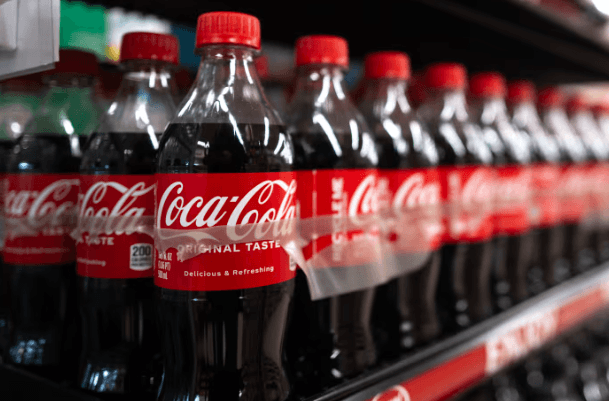
Coca-Cola (KO) does not usually dominate the market conversation. But in 2026, the stock has been quietly doing what investors care about most: moving higher.
Shares of KO are up about 20% year to date, showing that steady growth, pricing power and reliable execution can still attract buyers. In a market often pulled toward faster, flashier stories, Coca-Cola is making a simpler case: durable brands, strong margins and consistent earnings still matter.
Today, we’ll look at why KO remains an attractive long candidate, even after a strong start to the year. The business is executing, Wall Street remains bullish and Sigmanomics data helps frame the next move, with KO’s recent path choppy but still drifting higher.
What Coca-Cola Does—And Why the Story Still Works
Coca-Cola is one of the most recognizable companies in the world, but the investment case is bigger than the red can.
The company sells beverages in more than 200 countries, with a portfolio that includes Coca-Cola, Sprite, Fanta, Diet Coke, Coke Zero Sugar, Powerade, Minute Maid, Dasani, Smartwater, Topo Chico, BodyArmor, fairlife and many other brands. Coca-Cola now has more than 30 billion-dollar brands, giving it scale few consumer companies can match.
That scale is the core of the story. Coca-Cola has global distribution, massive marketing reach, deep retailer and restaurant relationships and a product portfolio that reaches across soda, zero-sugar drinks, water, sports drinks, dairy, tea, coffee and ready-to-drink beverages.
The business model also gives Coca-Cola a powerful advantage. The company has spent years making itself more capital-light by franchising out much of its bottling system. That lets Coca-Cola focus on brands, concentrate, marketing, innovation and revenue growth management, while bottling partners handle much of the production and distribution intensity.
That structure helps explain why Coca-Cola can produce strong margins. It is not simply selling cans and bottles. It is running a global brand and concentrate engine that benefits from pricing power, local execution and scale.
The result is a business that can look boring from the outside but still compound internally. Coca-Cola can grow through price/mix, volume, packaging innovation, emerging markets, premium products, affordability packs, zero-sugar offerings and better channel execution.
That is what makes the stock’s 2026 rally more interesting. KO is not working because investors discovered a new story. It is working because the old story is still delivering.
The Latest Earnings Report Had More Fizz Than Expected
Coca-Cola’s first-quarter results were stronger than a typical defensive staples story.
Net revenue rose 12% year over year to $12.5 billion, while organic revenue increased 10%. Unit case volume grew 3%, showing that growth was not just about pricing. Concentrate sales rose 8%, price/mix added 2% and the company gained value share in total nonalcoholic ready-to-drink beverages.
That volume growth matters. In consumer staples, pricing-led growth can only go so far before investors start worrying about demand. Coca-Cola’s ability to grow volume while also producing positive price/mix suggests the brand still has real pull with consumers.
Margins were also strong. Operating margin expanded to 35.0% from 32.9% a year earlier, while comparable operating margin improved to 34.5% from 33.8%. That improvement came despite higher input costs and higher marketing investment, which makes the margin performance more impressive.
Earnings followed the same pattern. Reported EPS rose 18% to $0.91, and comparable EPS rose 18% to $0.86. For a mature global beverage company, high-teens earnings growth is exactly the kind of result that can keep investors engaged.
The strength was broad enough to matter. North America revenue rose 12%, unit case volume grew 4% and comparable currency-neutral operating income increased 17%. Asia Pacific unit case volume grew 5%, helped by growth across beverage categories. Europe, Middle East and Africa, Latin America and Bottling Investments also posted reported revenue growth.
The product details were encouraging, too. Coca-Cola Zero Sugar volume grew 13%, Diet Coke/Coca-Cola Light grew 6%, water grew 5%, sports drinks grew 3% and tea grew 8%. That shows Coca-Cola is not relying only on legacy soda demand. The company is still finding growth in zero-sugar, water, sports, tea and other categories.
Management also maintained its full-year organic revenue growth outlook of 4% to 5% and updated its comparable EPS growth outlook to 8% to 9% versus 2025. That gives investors a clear growth formula: modest organic revenue growth, volume discipline, margin expansion, steady EPS growth and strong cash generation
Valuation is Elevated, But Arguably Justified
The strongest pushback on KO is valuation. After a strong year-to-date rally, the stock is no longer under the radar, and the multiples now reflect a business investors clearly view as high quality.
KO trades around 26x trailing GAAP earnings, compared with an industry average near 20x. Price-to-sales is roughly 7x versus an industry average near 1x, while price-to-book is around 10.5x compared with roughly 2.5x for the industry.
That premium is not hard to defend. Coca-Cola has many of the traits investors typically pay up for: global scale, durable brands, strong margins, a capital-light operating model, reliable cash generation and one of the longest dividend growth records in the market.
Wall Street still leans positive. Of the 25 analysts covering KO, 21 rate the stock a buy and four rate it a hold. That is a strong setup for a consumer staples name, and it suggests analysts still have confidence in Coca-Cola’s ability to grow through pricing, volume, margin discipline and global execution.
The price target is where the valuation debate gets more complicated. At roughly $83 per share, KO is already close to the average analyst target near $87, which suggests the consensus upside is not especially large from current levels. That does not weaken the quality case, but it does raise the bar for the next leg higher.
For KO to keep climbing, Coca-Cola likely needs to keep delivering the same mix that has powered the stock this year: steady volume growth, disciplined pricing, margin strength and dependable cash flow. The stock can still work, but future upside likely depends more on continued execution than on investors paying a much higher multiple for the same story.
Sigmanomics Data Adds Helpful Context, Highlighting KO’s Choppy Upward Trend
After the valuation debate, the trading question becomes more practical: can KO keep grinding higher without getting too stretched?
Data from Sigmanomics helps translate that setup into a practical trading range. Across the 7-day, 14-day and 28-day windows, KO’s recent-character read shows a choppy upward drift, suggesting the stock has continued to advance, but in a measured way rather than an overheated chase.
That is useful context for Coca-Cola. The upside case is not about a dramatic rerating. It is about continued execution, steady demand and enough momentum to keep pushing toward the upper end of its near-term range.
The 7-day expected move is plus or minus 2.1%, the 14-day expected move is plus or minus 3.2% and the 28-day expected move is plus or minus 4.9%. Based on a stock price near $83, that places the broader 28-day expected range around $79 to $87.
That upper end lines up closely with the average analyst price target near $87, giving traders a clear area to watch. If KO can move into the mid-to-upper $80s, it would suggest the stock still has momentum behind it, even after a strong year-to-date rally.
Andrew Prochnow
Options and volatility trader with more than 15 years of experience trading global financial markets, including 10 years as a professional options trader. Contributor to tastyfx, Barchart, Benzinga, New Constructs, DailyFX, and Luckbox Magazine. Covers forex, equities, options, and macro markets.