Natural Gas Lags Oil Despite Rising Tensions—An Opportunity May Be Emerging

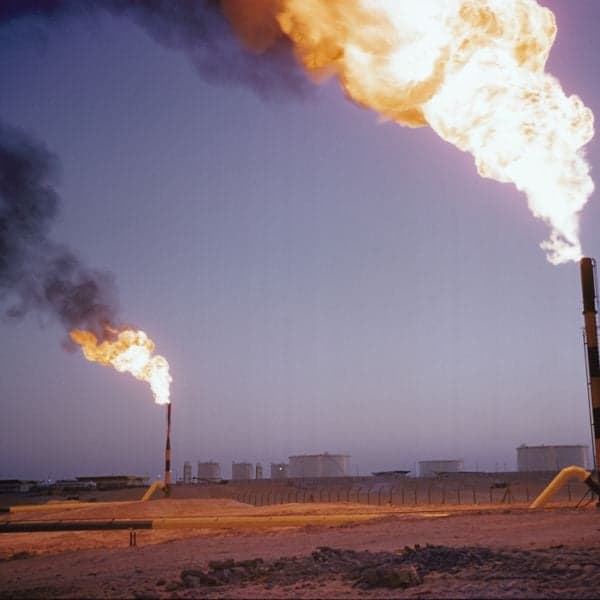
Natural gas has not followed the same path as the rest of the energy complex.
While geopolitical tensions in the Middle East have supported crude oil prices, U.S. natural gas has moved in the opposite direction. Prices recently fell to a 17-month low, dipping below $2.60 per MMBtu before stabilizing closer to $2.70.
The move lower has been driven largely by timing and fundamentals. The end of the winter heating season has reduced demand, while mild weather across key regions has allowed utilities to continue building storage at an above-average pace. A recent storage injection that exceeded expectations reinforced the view that supply remains more than adequate in the near term.
At the same time, natural gas remains primarily a domestic market. Unlike oil, which reacts quickly to geopolitical disruptions, U.S. natural gas prices are more directly tied to internal supply, storage, and weather patterns. That has helped insulate the market from global shocks, but it has also kept pressure on prices as demand softened.
That combination has pushed prices lower. But it may also be setting the stage for a shift.
Seasonality and Relative Value Begin to Favor Natural Gas
Part of the current weakness reflects a familiar seasonal pattern.
Natural gas demand tends to ease in the spring, as heating demand fades and the market transitions into storage build season. But that period can also mark the beginning of a turn, particularly if summer temperatures begin to drive cooling demand higher.
That dynamic is important because natural gas demand is highly sensitive to temperature. Just as a mild winter can weigh on prices, a hotter-than-expected summer can tighten the market quickly as electricity demand rises and power generators increase gas consumption.
Last year offered a useful reference point. Prices moved higher into early summer as cooling demand picked up, highlighting how quickly sentiment can change once weather begins to support consumption again.
At the same time, relative value has started to lean more favorably for natural gas.
The crude oil-to-natural gas ratio climbed sharply in recent months, though it has backed off its most extreme levels. With oil near $87 per barrel and natural gas around $2.70, the ratio now sits close to 32, down from roughly 44 on April 13. Even after that pullback, the spread still suggests oil is trading at a meaningful premium to gas by historical standards.
For context, the ratio was closer to 22 a year ago, and over the last five years it has ranged between about 10 and 70. That means today’s reading is not at an outright extreme, but it is elevated enough to stand out, especially given how depressed natural gas prices have become.
That does not mean natural gas has to rally immediately. But it does suggest that, on a relative basis, gas is looking undervalued within the broader energy complex.
Source: ycharts
A Bullish Bias—Backed by Forecasts and Positioning
Layering in a more quantitative perspective, the setup becomes more defined.
According to Sigmanomics data, natural gas is currently trading within a defined expected range that supports a bullish bias. The 28-day forecast projects an expected zone of roughly $2.59 to $2.96, placing current prices inside a range that is considered a valid long entry.
The upper bound of that range, near $2.96, represents the near-term target, while a move below approximately $2.40 would invalidate the setup.
Sigmanomics
That framing is important. It suggests that while the market has been under pressure, prices are now sitting in a zone where the risk/reward begins to skew more favorably to the upside.
That view also lines up with the broader backdrop. Positioning appears less stretched after the recent decline. Seasonal demand drivers are approaching. And relative value metrics are beginning to highlight how compressed natural gas prices have become.
Natural Gas Is Down—But Not Out
Taken all together, the setup is becoming harder to ignore. Natural gas is still being shaped by competing forces. Near-term supply remains ample, storage levels are comfortable, and weather has not yet turned supportive. But those conditions are not static.
The market is entering a period where demand can change quickly, particularly if summer temperatures come in above expectations. At the same time, prices are already sitting near recent lows, and relative value signals are starting to stand out more clearly.
This is not a clean, one-directional trade. But it is a market where the downside appears more defined, while the upside could expand if conditions begin to shift.
For traders and investors watching the space, that combination may offer a more compelling setup than it has in recent months. If seasonal demand strengthens and sentiment begins to turn, natural gas could be positioned for a move higher from currently depressed levels.
How Traders Can Express Their View
For those looking to participate, there are several ways to express a bullish view on natural gas.
The most direct route is through natural gas futures, which provide pure exposure to price movements and are typically favored by more active traders. Futures offer flexibility and capital efficiency, but they also come with leverage and require a disciplined approach to risk management.
For a more accessible alternative, exchange-traded products like the United States Natural Gas Fund (UNG) can also provide exposure without the need to trade futures directly. UNG currently trades around $10.80, compared with a 52-week low near $9.95 and a 52-week high closer to $19.
That range helps illustrate both how washed out the space has become and how quickly sentiment can shift when natural gas prices begin to move. For those inclined, UNG also offers listed options, providing another way to express a directional view with defined risk.
At the end of the day, the vehicle depends on the objective. But with prices near 52-week lows, seasonal demand approaching, and forward-looking indicators turning more constructive, natural gas is a market that may be worth a closer look.
Andrew Prochnow
Options and volatility trader with more than 15 years of experience trading global financial markets, including 10 years as a professional options trader. Contributor to tastyfx, Barchart, Benzinga, New Constructs, DailyFX, and Luckbox Magazine. Covers forex, equities, options, and macro markets.